A China innovation tour in 2027 is a business expedition across four cities, not a government product with that name. Shenzhen, Hangzhou, Shanghai and Beijing sit in three official regional strategies — the Greater Bay Area, the Yangtze River Delta innovation centre, and Jing-Jin-Ji — and the reason to combine them on one trip is to see hardware, platforms, applied AI and policy in the same week, rather than treating each cluster as a separate story.
This article is for investors, founders and leadership teams planning that route. It sets out why each city belongs on the itinerary, which visits are documented as hosted or reservable, and what still has to be arranged company by company. For the commercial programme, see our China Innovation & AI Tour. The sample route on that page runs from Shenzhen to Hangzhou and Shanghai; Beijing is added when the brief needs it.
Key takeaways
- The four-city route crosses three official frames, not one official tour. There is no government product called a four-city 2027 innovation tour. The official strategies that do exist are the Guangdong-Hong Kong-Macao Greater Bay Area (Shenzhen), the Shanghai (Yangtze River Delta) International Science and Technology Innovation Center (Shanghai and Hangzhou), and Jing-Jin-Ji (Beijing and E-Town).
- Shenzhen’s 2026 visibility is current, not a 2027 events calendar. Official coverage of APEC Economic Leaders’ Week, including the CEO Summit that opened in Shenzhen on 17 November 2026 and the leaders’ meeting scheduled for 18–19 November, is a strong reason to keep the city on a 2027 hardware and advanced-manufacturing itinerary. It is not, by itself, a list of 2027 conferences.
- Hangzhou’s “six little dragons” are a named group, not a visit list. Official Zhejiang coverage on 10 March 2026 names DeepSeek, Unitree Robotics, Game Science, DEEP Robotics, BrainCo and Manycore Tech. There is no official bookable tour of DeepSeek, Game Science or Manycore Tech that we can point to.
- Shanghai and Beijing are documented in official visit programmes and policy. Zhangjiang hosted a multinational-enterprise tour on 18 September 2026. Beijing issued an embodied-intelligent-robot action plan on 11 November 2026, valid until 31 December 2028, and E-Town already has a public-facing robot 4S store and a 2026 humanoid half-marathon on the official record.
- Plan 2027 entry now. The 30-day visa-free arrangement for ordinary passports from Spain, most EU countries, the United Kingdom, Canada and several Latin American countries runs until 24:00 on 31 December 2026, Beijing time. As of 19 November 2026 no general extension into 2027 had been announced. Check the Chinese embassy before booking a 2027 trip.
What a China innovation tour is — and what it is not
The phrase gets used loosely, sometimes as a packaged government itinerary and sometimes as a city-break with a technology museum attached. Neither is what a serious investor or leadership team should be buying. Official China talks about innovation in regional terms: the Greater Bay Area, the Yangtze River Delta innovation centre, and Jing-Jin-Ji. A four-city expedition is a way of crossing those three frames in one trip. That is a programme choice, not an official corridor and not a ticketed national tour.
The commercial offer behind this article is Gate Kaizen’s Deep-Tech & AI expedition, also presented on that page as the China Innovation & AI Tour. The live page describes a high-intensity immersion into the companies, founders, factories, incubators and policy makers shaping China’s technology, in both its polished and its gritty sides. It is a bespoke expedition, not a fixed tour: the route is built around the agenda. The sample route is Shenzhen, Hangzhou and Shanghai. Beijing is the natural fourth city when the brief needs Haidian’s large-model cluster or Yizhuang’s robotics corridor, as set out in our Beijing tech tour and in the optional Beijing add-on discussed in our China investor tour.
What you are usually offered, in every city, is a hosted visit: a briefing, a showroom, an exhibition hall, an incubator session or a demonstration line. That is not the same thing as a factory audit, and it is not on-demand access to a named laboratory. Our China tech tour for investors and China AI model race articles describe past routes in that spirit, including companies Gate Kaizen delegations have already met. New access is still requested for each brief and confirmed with each host.
Shenzhen and the Greater Bay Area
Shenzhen is where a China innovation tour usually starts, because this is the hardware and advanced-manufacturing end of the map. Our Shenzhen tech tour covers Huaqiangbei, the platform and mobility companies in the city, and the difference between a hosted visit and a factory floor. The official frame around the city is the Guangdong-Hong Kong-Macao Greater Bay Area, which also appeared in the official programming for APEC 2026.
That 2026 visibility is one reason the city still belongs on a 2027 itinerary. Official Chinese government coverage dated 17 November 2026 reported that the APEC CEO Summit opened in Shenzhen that day under the theme “To Prosper and Win the Future Together,” with more than 2,000 representatives from 21 APEC economies and 13 non-APEC economies, including Britain, France, Germany and Switzerland, and representatives of 115 Fortune Global 500 companies. The 33rd APEC Economic Leaders’ Meeting was scheduled in Shenzhen on 18–19 November 2026, under the theme “Building an Asia-Pacific Community to Prosper Together,” with Chinese-stated priorities of openness, innovation and cooperation, and with sessions that included the Greater Bay Area (english.www.gov.cn / Xinhua, 17 November 2026).
The same day’s foreign ministry briefing presented Shenzhen as the third Chinese city to host an APEC leaders’ meeting and as a showcase of high-quality development and opening-up. Those are strong, dated reasons to keep Shenzhen on a 2027 hardware, robotics and advanced-manufacturing route. They are not a 2027 events calendar, and we do not invent one. We also do not quote cluster-size or 2027 industrial-output targets for Shenzhen from secondary summaries of a municipal action-plan page that did not load in the source check for this article.
On the live expedition page, companies that deep-tech delegations have met, or that can be added to a route, include Tencent Cloud International, EHang, GAC, UBTECH Robotics, BYD, DJI and Plug and Play China, all in Shenzhen, with the usual caveat that access is requested for each brief. A past sample itinerary on that page also includes Huaqiangbei, Tencent WeStart and a factory visit. Those are examples from a past expedition, not a promise that every 2027 group will walk the same floors. For the street-level hardware side, see also Inside Shenzhen’s Huaqiangbei.
Hangzhou: platforms, robot makers and a named group of six
If Shenzhen is where things are built at scale, Hangzhou is where platform companies and a tight cluster of robot and AI firms sit close together. Official planning for the Shanghai (Yangtze River Delta) International Science and Technology Innovation Center treats Hangzhou as one of five “key pillars,” with advantages described as the digital economy, platform firms, entrepreneurship and application scenarios, and with a stated priority of becoming a leading AI-application city, including a national AI application pilot base, computing supply, open source, embodied intelligence and sector applications (Shanghai Municipal Cooperation and Exchange Office, 13 August 2026).
Official Zhejiang coverage on 10 March 2026 presents Hangzhou as an innovation hub around the “six little dragons”: DeepSeek, Unitree Robotics, Game Science, DEEP Robotics, BrainCo and Manycore Tech. Hangzhou mayor Yao Gaoyuan, quoted in the same article, said that among these six, four were preparing for stock-market listings, and that most recorded triple-digit revenue or output growth “last year.” The same official report says the city launched a “Runmiao” programme and fund for “new technology dragons”; that Zhejiang’s 2026 government work report calls for an AI innovation highland and for core AI-industry revenue to rise by more than 20 percent in 2026; that the province’s AI sector generated more than 710 billion yuan in revenue in 2025; and that officials selected 96 startups as “new technology dragons,” 57 percent of them AI firms.
Those names and figures describe an ecosystem, not a visit list. There is no official bookable tour of DeepSeek, Game Science or Manycore Tech that we can point to. What is documented as visitable is more specific. Official Hangzhou tourism still advertised a group-reservation visit to the Alibaba Global Headquarters AI Smart Campus, 09:00–17:00, as of 9 July 2026. The official April 2026 tour of more than 150 foreign companies included Alibaba’s Xixi campus, Cainiao headquarters and Unitree Robotics, where the city report says foreign engineers inspected quadruped robots and core components.
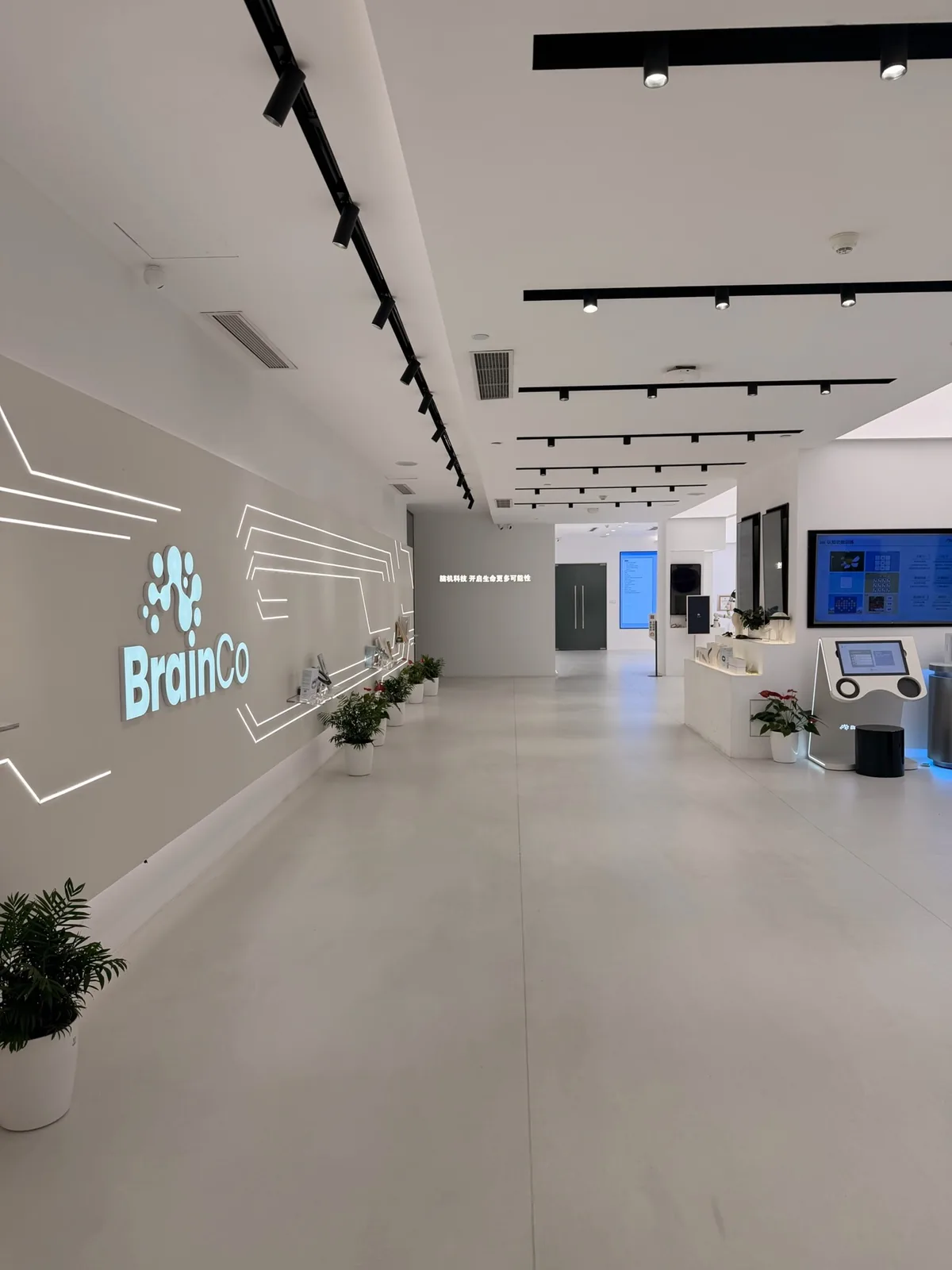
Past Gate Kaizen routes already document some of those Hangzhou doors in first-hand terms. The Deep-Tech & AI expedition and the investor tech-tour guide include Alibaba, BrainCo and the Hangzhou Robot Experience Centre on a sample or past route. The executive study tour records visits to DEEP Robotics and BrainCo. Unitree appears among the companies deep-tech delegations have met, or can add. INFIFORCE is named in our AI model-race article as a stop on the October 2026 expedition. New access is still requested for each brief. A showroom or a campus exhibition is not the same thing as a production-line audit, and we do not describe it as one.
Shanghai, the dragon head of the Yangtze centre
Shanghai is the official “dragon head” of the Shanghai (Yangtze River Delta) International Science and Technology Innovation Center, expected to source innovation and radiate to Jiangsu, Zhejiang and Anhui (Shanghai Municipal Cooperation and Exchange Office, 13 August 2026). That is why a China innovation tour that stops in Hangzhou and never enters Shanghai, or the other way around, misses the official division of labour. Our Shanghai tech tour is the city-level account; what follows is the reason the city belongs on the four-city route.
The applied-AI side of the city is most often shown to foreign companies in Zhangjiang, Pudong. On 18 September 2026 a “Multinational Enterprises Shanghai Tour,” organised with the Shanghai Investment Promotion Office and CITIC, brought a delegation of multinational firms, industry associations and professional-service firms from the United Kingdom, Germany, France, Japan and Korea to Zhangjiang (Shanghai municipal outbound-services platform, 20 September 2026). Documented stops included a briefing at the Zhangjiang AI Innovation Town service centre, an “AI application store” with bilingual robot interaction, and afternoon visits to Zhangjiang Pharma Valley and Zhangjiang Robot Valley.
At that same briefing, Zhangjiang Group’s deputy general manager stated that Zhangjiang Science City covers a planned 220 square kilometres; that it has gathered more than 24,000 firms and 500,000 innovators; that its three leading industries are integrated circuits, biomedicine and artificial intelligence; and that it has laid out Zhangjiang Pharma Valley, Zhangjiang Robot Valley and Zhangjiang AI Innovation Town. The same official report says Pudong has 28,000 foreign-invested firms, 346 Fortune Global 500 firms, 509 multinational regional headquarters and 304 foreign R&D centres. These are official promotional figures given at the 18 September 2026 briefing, not independently audited counts.
West of the river, Xuhui has also hosted foreign visitors in formats that are on the official record. The Shanghai Humanoid Robot Innovation Incubator, described in official English coverage as China’s first incubator dedicated to humanoid robots, hosted a 57-member international scholar delegation on 30 April 2026. The Shanghai Foundation Model Innovation Center has hosted foreign official and media visits, including ministerial guests on 9 July 2025 and a joint Chinese and Russian journalist delegation on 20 August 2026. Those reports evidence hosted visits to a showroom or experience centre, not a published self-booking programme.
On Gate Kaizen routes, Shanghai is often where policy and capital sit next to the company visits. The live Deep-Tech & AI page records a Jing’an District Mayor meeting on FDI and local innovation support, a Hongqiao CBD incubator visit, and feedback from foreign tech founders. The investor guide and the AI model-race article also record a SenseTime exhibition-hall visit on the October 2026 expedition. Those are first-hand stops already on live Gate Kaizen pages. They still have to be requested again for a new brief.
Beijing, Jing-Jin-Ji and the robotics corridor
Beijing completes the four-city picture because it concentrates two things the other cities do not hold in the same way: a dense large-model cluster in Haidian, and a municipal robotics policy, with a public-facing demonstration zone, in E-Town (Yizhuang). Our Beijing tech tour is the detailed city guide. The official regional frame is Jing-Jin-Ji coordinated development, which the city’s new robotics action plan applies to industrial-chain capacity and localisation.
On the model side, a 9 January 2026 Beijing Daily report carried on the National Center for Science and Technology Information site states that Zhipu, incubated by Tsinghua and headquartered in Tsinghua Science Park, listed on the Hong Kong Stock Exchange on 8 January 2026 — the first listing, it says, for a company whose core business is a general-purpose AI foundation model. The same article places Zhipu, ModelBest, Shengshu Technology and the Beijing Academy of Artificial Intelligence in the Wudaokou area, and states that Haidian had gathered more than 1,900 AI firms and 122 registered large models, nearly 60 percent of Beijing’s total, with Beijing at 209 registered large models, nearly 30 percent of the national total. Treat those figures as official-media reporting as of early January 2026, not as a visitor-programme catalogue and not as a walking tour of named laboratories.
What is on a public official programme in Haidian is more limited. From 8 August 2026, Beijing launched three public tour routes covering ten sci-tech parks in Haidian, reserved via an official WeChat account (english.beijing.gov.cn, 10 August 2026). The 2026 Zhongguancun Forum also ran a science-park visit programme for forum guests on 27 March 2026. Those are park tours and forum side events, not on-demand access to Zhipu, Moonshot, Baichuan or Baidu laboratories. Gate Kaizen’s October 2026 expedition did include hosted campus and exhibition meetings at ByteDance and Baidu, as recorded in our AI model-race article; those were hosted visits, not walk-in laboratory tours.
The robotics side of the capital is concentrated in E-Town. Robot Mall, described by official municipal sources as the world’s first embodied-intelligence or humanoid-robot “4S” store, opened on 8 August 2025 in the Beijing Robotics Industrial Park, coinciding with the 2025 World Robot Conference. Official descriptions at opening include about 4,000 square metres over four floors and more than 50 robot products from 40-plus manufacturers. As of 16 November 2026, official E-Town coverage still treated Robot Mall, a neighbouring robot-themed restaurant and “Robot World 3.0” as current formats. We found no official closure notice, and we do not print a street address that we have not confirmed on an official page.

The same district put that cluster on a public racecourse on 19 April 2026, when the Beijing E-Town Half Marathon and Humanoid Robot Half Marathon was held in the development area. Official municipal figures: more than 100 humanoid-robot teams and 12,000 human runners, with the robot champion “Lightning” finishing in 50 minutes 26 seconds, and with international teams from Germany, France, Portugal and Brazil among those named (beijing.gov.cn, 21 April 2026). Official ecosystem counts should be quoted with their dates rather than merged: more than 300 robotics and intelligent-manufacturing ecosystem firms as of 11 August 2025, and more than 300 embodied-intelligence ecosystem firms in the 21 April 2026 race report. Official English coverage on 12 August 2025 also described a robotics industry chain valued at more than 10 billion yuan, about half of Beijing’s robotics output.
Manufacturing capacity is also now on a later official record. As of 16 November 2026, official E-Town coverage said the area had built the Beijing Humanoid pilot-validation platform, with current annual capacity of 5,000 units (sets), and “Jing-Jin-Ji’s first 10,000-unit-class embodied-intelligence robot super factory,” identified as Lingyi Intelligent Manufacturing’s Beijing super factory, with planned annual capacity ramping to 10,000 units in 2026, 20,000 in 2027 and 500,000 in 2030. Prefer those 16 November 2026 figures when writing about current capacity; earlier 2025 policy targets should be kept clearly dated.
The policy wrapping those sites is fresh. The Beijing Municipal Bureau of Economy and Information Technology issued the “Beijing Action Plan for High-Quality Development of the Embodied Intelligent Robot Industry (2026–2028)” on 11 November 2026, effective until 31 December 2028. Stated 2028 goals include cultivating no fewer than five internationally first-class and ten domestically leading humanoid complete-machine firms, and raising Jing-Jin-Ji regional complete-machine capacity to 25 percent of the national total, with a key-parts supporting rate above 60 percent. The same plan also sets a Beijing complete-machine capacity target of 200,000 units a year, continues the “two conferences and one race” brand — the World Robot Conference, the humanoid games and the half marathon — and encourages qualified Beijing firms to expand overseas and foreign firms to set up R&D and manufacturing bases in Beijing. A Beijing-Tianjin-Hebei Robot Industry Chain Working Committee was established in E-Town, reported on 28 January 2026.
How a China innovation tour is put together for 2027
The four-city logic above is a map, not a timetable. We are not inventing a day-by-day 2027 schedule, a public ticket price, or a guaranteed visit to a company that has not confirmed the meeting. The live China Innovation & AI Tour is offered as a private group or delegation. Duration is tailored to the agenda, and dates are on request. The published sample route runs Shenzhen to Hangzhou and Shanghai; Beijing is added when the brief needs Haidian or Yizhuang. A China AI innovation tour can lean further into model companies, robotics or manufacturing depending on who is in the room.
Some stops have an official reservation channel, such as Alibaba’s Hangzhou campus as of July 2026, or a public format, such as Robot Mall and the Haidian park tours. Most named company visits do not. DeepSeek, Zhipu, Moonshot and a production line at a firm whose 2026 visit page we could not open are not treated as standard bookable stops. What you are usually offered is a hosted visit, not a factory audit. Pricing depends on group size and programme; we send a tailored quote after your enquiry. There is no published starting price. For trips in 2027, check the Chinese embassy in your country before booking: the 30-day visa-free arrangement for usual client nationalities currently runs only to 24:00 on 31 December 2026, Beijing time, and no general extension had been announced as of 19 November 2026.
Frequently asked questions about a China innovation tour
What is a China innovation tour?
A China innovation tour, as we run it, is a bespoke business expedition across China’s main technology clusters, not a government sightseeing product and not a fixed public timetable. The route is built around the brief and typically crosses three official regional frames: the Greater Bay Area in Shenzhen, the Yangtze River Delta innovation centre in Hangzhou and Shanghai, and Jing-Jin-Ji in Beijing. The live Deep-Tech and AI expedition page describes it as a high-intensity immersion into the companies, founders, factories, incubators and policy makers shaping China’s technology.
Is there an official four-city innovation tour for 2027?
No. There is no official government product with that name. The official regional strategies that do exist are the Greater Bay Area, the Yangtze River Delta innovation centre, and Jing-Jin-Ji coordinated development. A four-city itinerary is a programme choice that crosses those three frames. Dates are on request and set with each group; we do not publish a standard 2027 departure calendar.
Which cities does a China innovation trip include?
The sample route on our Deep-Tech and AI expedition page runs Shenzhen to Hangzhou and Shanghai. Beijing is added when the brief needs large-model labs in Haidian or the Yizhuang robotics corridor. A China AI innovation tour can emphasise platforms, model companies or hardware depending on the agenda; the city sequence is a means, not the product.
Can we visit DeepSeek, Unitree, Zhipu or the other well-known names?
Some doors are documented; others are not standard, bookable stops. Official Hangzhou tourism still advertised a group-reservation Alibaba campus visit as of July 2026, and an official April 2026 city tour included Alibaba, Cainiao and Unitree. Official Zhejiang coverage names Hangzhou’s six little dragons, but that list is not a visit menu: we found no official bookable tour of DeepSeek, Game Science or Manycore Tech. In Beijing, public park tours and a robot 4S store are not on-demand access to Zhipu, Moonshot or Baidu laboratories. Every company visit on a Gate Kaizen route is requested for that brief and confirmed with the host.
How long is the expedition, and what does it cost?
The length and the dates are set with each group around your agenda. Dates are on request. The live expedition is offered as a private group or delegation. Pricing depends on group size and programme; we send a tailored quote after your enquiry. There is no published starting price. International flights, personal extra meals and expenses, and visa costs when they apply, are not included.
Do I need a visa for a 2027 China innovation tour?
It depends on your passport, and the 2027 rules are not settled. Ordinary-passport holders from Spain and most (not all) EU countries, the United Kingdom, Canada, and from Argentina, Brazil, Chile, Peru and Uruguay can currently enter China visa-free for up to 30 days for business, until 24:00 on 31 December 2026, Beijing time. As of 19 November 2026 no general extension into 2027 had been announced; China’s foreign ministry said it was seriously studying the policy. For trips in 2027, check the Chinese embassy in your country before booking.
Plan your China innovation tour
The Gate Kaizen China Innovation & AI Tour is a high-intensity immersion into the companies, founders, factories, incubators and policy makers shaping China’s technology, in both its polished and its gritty sides. It is a bespoke expedition, not a fixed tour: the route is built around your agenda. The sample route runs from Shenzhen to Hangzhou and Shanghai; Beijing can be included when the brief needs it. Dates are on request, set with each group. Pricing depends on group size and programme; we send a tailored quote after your enquiry.