A China investor tour in 2027 is a due-diligence trip, not a sightseeing one. China’s AI and robotics companies are listing again, state capital is moving into early-stage hard tech, and the founders, co-investors and suppliers that decide whether a deal works can be met in one well-planned week.
This article is for venture and growth investors, family offices and corporate venture teams planning that week. It covers why the timing has changed, which listing routes shape every founder conversation, who you actually meet, what to test on the ground, and what to bring back to your investment committee. For the commercial programme, see our deep-tech and AI expedition.
Key takeaways
- Exits are back. Hong Kong raised more than HK$388 billion from 116 IPOs in the first nine months of 2026, second only to Nasdaq, and more than half came from high-tech sectors such as AI, semiconductors and robotics.
- Listing routes shape valuations. Hong Kong’s Chapter 18C and the STAR Market’s reopened route for unprofitable tech firms decide when and where a founder can exit, and who must be on the cap table first.
- State capital is a co-investor. A national venture guidance fund launched in December 2025 with 100 billion yuan of central capital and a 1 trillion yuan target.
- Check your own rules first. US persons face outbound investment restrictions on Chinese AI, semiconductor and quantum companies, and Treasury proposed a wider rule in October 2026.
- Plan 2027 entry now. The 30-day visa-free arrangement for many European and UK passports runs until 31 December 2026; no extension had been announced as of 10 November 2026.
Why a China investor tour belongs in a 2027 plan
The first reason is deal volume. The China Internet Network Information Center counted 1,255 AI investment deals worth about 250 billion yuan in the first half of 2026 (ECNS, 29 Sep 2026). That is a market where good companies are oversubscribed and where the first serious conversation often happens in person, not on a video call.
The second is state money at the early stage. In December 2025 China launched a national venture capital guidance fund with 100 billion yuan (about US$14 billion) of central government capital, aiming to mobilise 1 trillion yuan in total for strategic and future industries such as semiconductors and biotechnology (Caixin Global, 26 Dec 2025). Cities run their own programmes too. Hangzhou’s Runmiao (“nurturing seedlings”) programme scores early-stage firms and backs selected ones with equity, loans, subsidies, guarantees and insurance, through a fund with a horizon of up to 20 years (China Daily, 10 Mar 2026). For a foreign investor, that changes who sits on the other side of the cap table.
The third is information. Rest of World reported in May 2026 that foreign founders, investors and engineers are taking curated trips to EV factories, robotaxi programmes and AI and robotics companies. One Mumbai-based investor told the publication that seeing Chinese manufacturing costs first-hand changed his view of competitiveness and led him to exit positions that later fell 40–50% (Rest of World, 28 May 2026). That is the kind of signal no data room provides.
The exit window has reopened
For most of the past four years, the question investors asked about China was how to get out. In 2026 it became how to get in early enough. KPMG counted 116 Hong Kong IPOs raising more than HK$388 billion in the first three quarters, more than double the prior year and above every previous nine-month total. Hong Kong ranked second globally by funds raised, behind Nasdaq, and more than half of the proceeds came from high-tech sectors such as AI, semiconductors and robotics. On the mainland, Shanghai’s STAR Market raised 105.5 billion yuan, more than 13 times the prior year (KPMG China, 6 Oct 2026).
Three listings show what that looks like company by company.
| Company | Background | Listing | What happened |
|---|---|---|---|
| Zhipu AI | Large-model developer founded in 2019 by Tsinghua University professors (Rest of World) | Hong Kong, 8 Jan 2026 | Closed about 13% up on its first day (China Daily Asia) |
| MiniMax | Shanghai-based AI model developer | Hong Kong, 9 Jan 2026 | Raised about US$619 million; retail tranche more than 1,830 times subscribed (China Daily Asia) |
| Unitree Robotics | Hangzhou robot maker | STAR Market, 19 Aug 2026 | Raised 6.1 billion yuan (Caixin); shares peaked more than 620% up and closed 460% higher on day one (Al Jazeera) |
A listing pipeline like this changes the conversation in a meeting room. Founders talk about the next round and the eventual exit in the same breath, local co-investors are easier to find, and late-stage rounds price in a public-market comparison that did not exist two years ago.
Know the listing routes before you meet a founder
Most founders you meet on an investor tour already have a view on where they will list. Knowing the three rule sets below lets you ask better questions in the first meeting, and spot when a round is being priced off an exit the company may not qualify for.
Hong Kong Chapter 18C
In force since 31 March 2023 for specialist technology companies in five groups, including next-generation information technology and advanced hardware and software. Under temporary modifications announced on 23 August 2024 and in force from 1 September 2024 to 31 August 2027, a commercial company needs a market capitalisation of at least HK$4 billion and HK$250 million of revenue; a pre-commercial company needs at least HK$8 billion, down from the original thresholds of HK$6 billion and HK$10 billion (HKEX and SFC, 23 Aug 2024). Before listing, two to five “pathfinder” sophisticated independent investors must have invested at least 12 months earlier, together holding at least 10% or HK$1.5 billion, with at least two of them each holding 3% or having invested HK$450 million (Skadden). For a foreign fund, that pathfinder role is a concrete way in. KPMG counted 19 Chapter 18C listings in the first nine months of 2026, raising HK$36.2 billion, against eight in the previous three years combined (KPMG China).
STAR Market growth tier
In June 2025 the chairman of the China Securities Regulatory Commission (CSRC) announced a new growth tier on Shanghai’s STAR Market and the restart of the “fifth set” of listing standards, which lets fast-growing but unprofitable technology companies list. The rules started with biomedicine and semiconductors, and officials said they may extend to frontier sectors such as artificial intelligence, commercial aviation and the low-altitude economy (Shanghai municipal government, 18 Jun 2025).
CSRC filing for overseas listings
Since 31 March 2023, mainland companies listing abroad, including in Hong Kong and through offshore “red-chip” or VIE structures, must file with the CSRC within three working days of submitting their listing application (Norton Rose Fulbright). Ask where a company stands in that process; it affects the timeline you are underwriting.
Who investors meet on a China investor tour
A good route is built around counterparts, not landmarks. Each city on a typical investor route gives access to a different part of the deal.
| Counterpart | Where | What you learn |
|---|---|---|
| AI and robotics founders | Hangzhou | How fast a hardware-plus-AI company moves from prototype to listing |
| Hardware supply chain and manufacturers | Shenzhen | Whether a company can build at the volume its valuation assumes |
| Large-model developers and research institutes | Beijing | Where model capability, talent and regulation are heading |
| AI companies serving industry, and the WAIC ecosystem | Shanghai | Which applications are winning paying customers |
| Bankers, sponsors and co-investors | Hong Kong | How exits are being priced and who else is in the round |
Hangzhou is where you meet founders. The city’s “six little dragons” are DeepSeek, Unitree Robotics, Game Science, DEEP Robotics, BrainCo and Manycore Tech. In March 2026 the city’s mayor, Yao Gaoyuan, said four of the six were preparing listings and that most had recorded triple-digit growth in revenue or output; Zhejiang province has also named 96 start-ups as “new technology dragons”, 57% of them AI companies (China Daily, 10 Mar 2026). Unitree has since listed, and its founder Wang Xingxing said in February that the German chancellor’s visit to the company “highlights the global focus on China’s robotics industry” (CGTN via eHangzhou). Friedrich Merz had brought a delegation of business leaders to Hangzhou on 26 February 2026 (Al Jazeera).
Shenzhen is where you test the supply chain. The city reported more than 2,600 AI enterprises above designated size and over 1,000 core robotics companies, and spent 6.67% of GDP on R&D in 2024, more than 93% of it by companies (Shenzhen government, 10 Feb 2026). UBTECH, based in Shenzhen, reported 590.3 million yuan of full-size humanoid robot revenue in the first half of 2026, from 921 units (KrASIA, 31 Aug 2026). In Huaqiangbei, the city government says 90% of core components can be sourced within an hour and samples made in two days (Shenzhen government, 25 Aug 2026). Our Shenzhen tech tour for executives covers the city in detail.
Beijing is the model-lab end of the route. It had 183 registered large AI models, the most of any Chinese city, and more than 2,500 AI firms, with its AI industry estimated above 450 billion yuan in 2025 (China Daily, 26 Jan 2026). We described what delegations saw at the big platforms in Inside China’s AI model race.

Shanghai is where AI meets paying customers, and where MiniMax is based. The city counted 394 major AI enterprises in 2025, with a combined scale above 637 billion yuan, up 39.5%, and hosts the World Artificial Intelligence Conference (WAIC), whose 2026 edition drew more than 1,100 exhibitors (Shanghai municipal government, 8 Jul 2026).
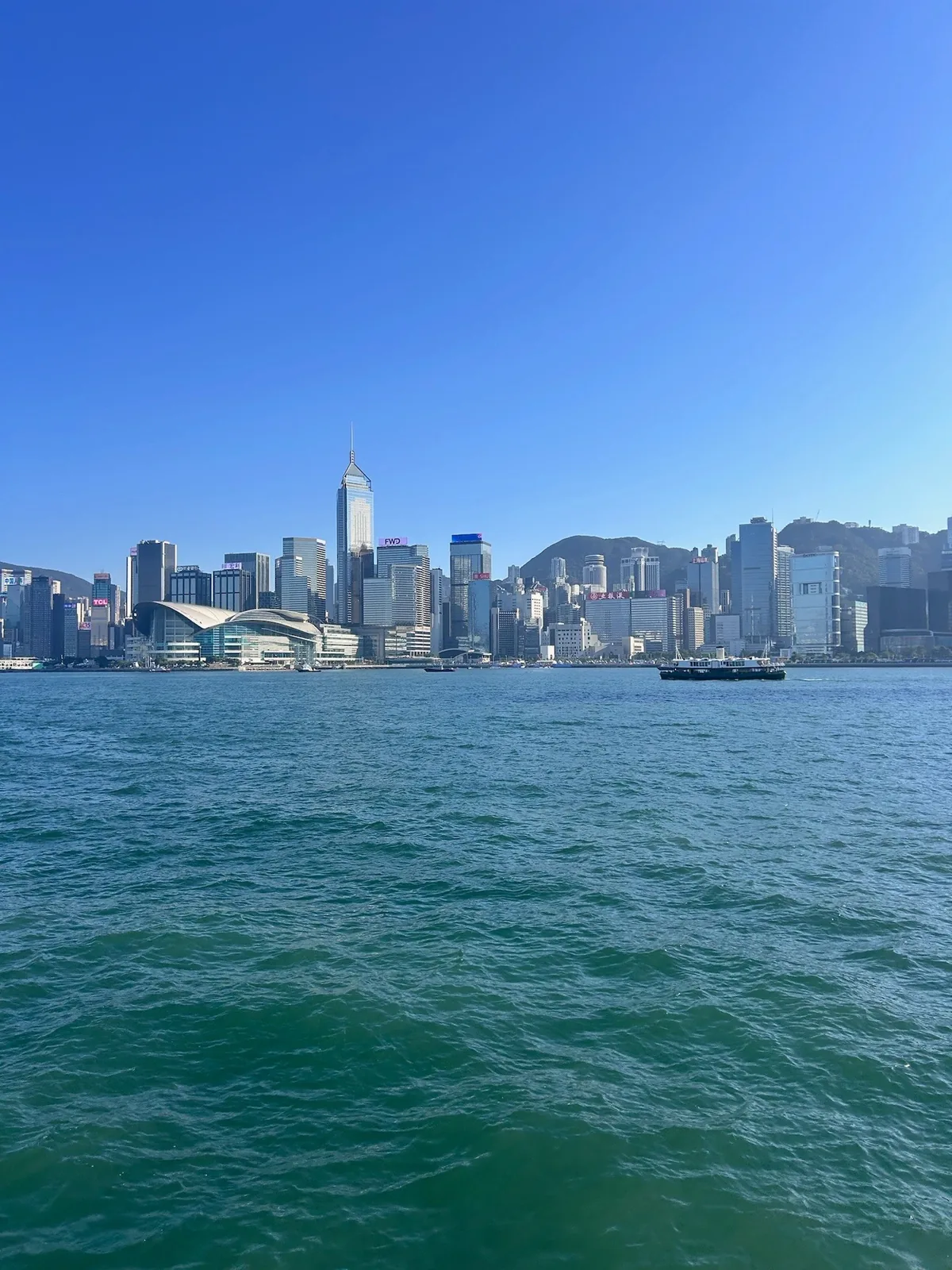
Hong Kong closes the loop. It is where the listing numbers above are made, and where sponsors, bankers and the funds you may co-invest with can be met at the start or end of the week.
What investors come to judge
Visits are only useful if you know what you are testing. Five questions do most of the work.
1. Speed from prototype to revenue
How long did the last product take from first sample to paying customer, and what does the next one look like? In China’s hardware-plus-AI companies, this is often the single number that separates a real business from a demo.
2. Depth of the supply chain
Can the company build at the volume its valuation assumes? A factory floor, a component supplier and a contract manufacturer will tell you more than a forecast.
3. Who else is on the cap table
State guidance funds, municipal programmes such as Runmiao, strategic investors and local VCs each bring different expectations on control, timing and exit. Ask early.
4. The realistic exit route
Chapter 18C, the STAR Market growth tier or a later listing elsewhere: which one does the company qualify for, and where does it stand on the CSRC filing?
5. Your own regulatory exposure
US persons are prohibited from, or must notify Treasury of, certain investments in Chinese semiconductor, quantum and AI companies under a rule in effect since 2 January 2025 (Sullivan & Cromwell). Congress codified the programme in the COINS Act, and on 22 October 2026 Treasury proposed extending it to biotechnology and to “super intelligence” AI developers, with comments due by 7 December 2026 (WilmerHale). European and Asian funds should check their own LP terms and home-country rules. This is not legal advice.

A sample week: how an investor tour is structured
Our China Innovation & AI Tour runs a six-day sample route from Shenzhen to Hangzhou and Shanghai, from the Pearl River Delta to the Yangtze River Delta, and every programme is tailored to the group. For investors, a typical week is organised around the five questions above; the table below is illustrative. Named companies are never promised in advance; access depends on each host’s schedule and is confirmed route by route.
| Day | Base | Focus for investors |
|---|---|---|
| Optional day 0 | Hong Kong | Bankers, sponsors and co-investors; how 2026 listings priced |
| Day 1 | Shenzhen | Hardware and robotics companies; the component market |
| Day 2 | Shenzhen | Manufacturing and supply-chain checks; incubators |
| Day 3 | Hangzhou | AI and robotics founders; the city’s start-up support |
| Day 4 | Hangzhou | Platform companies; founder and management meetings |
| Day 5 | Shanghai | AI applied to industry; capital-market conversations |
| Day 6 | Shanghai | Debrief and investment-committee memo; departures |
| Optional extension | Beijing | Large-model developers, research institutes and policy |
Teams that want more on each city can read our China tech tour for investors. Leadership teams rather than funds usually choose the China executive study tour format instead.
What to prepare before the meetings
The investors who get the most from a week in China arrive with their questions already written down.
A one-page thesis per sector
What you believe about humanoid robots, model developers or AI hardware, and what would change your mind. Share it with the organiser so each meeting is chosen to test it.
A question list per company type
Founders: last product cycle, next round, listing plan. Manufacturers: capacity, lead time, customer concentration. Co-investors: entry valuations and exit expectations.
A compliance check
Confirm with counsel which sectors and structures your fund can invest in, including the US outbound rules above, before the trip rather than after a promising meeting.
Entry and timing
Many European passports, including those of France, Germany, Italy and Spain, currently allow 30 days visa-free for business, but the arrangement runs until 31 December 2026 (Beijing municipal government). The UK was added from 17 February 2026 to the same end date (China-Britain Business Council). No extension had been announced as of 10 November 2026. Lunar New Year falls on 6 February 2027 (RTHK), and company visits are hard to arrange in the weeks around it.
What investors bring home
A China investor tour is worth the flight if it changes a decision. The outputs fall into four groups.
A calibrated view of cost and speed
A first-hand sense of how fast Chinese companies in your sectors design, build and ship, and what that does to the competitors in your portfolio.
A shortlist of founders and co-investors
Names, conversations and follow-up meetings, not desk research.
A view on the exit route
Which listing route each target company is preparing for, and how realistic its timeline is.
An investment-committee memo
Enough evidence to decide whether to invest, partner, wait or pass, written while the meetings are fresh.
Frequently asked questions
What is a China investor tour?
A China investor tour is a short, structured trip for venture, growth and corporate investors. It combines founder meetings, company and factory visits and capital-market briefings in cities such as Hangzhou, Shenzhen, Beijing, Shanghai and Hong Kong, so investors can assess companies, co-investors and exit routes first-hand.
Who should join a China investor tour?
Venture capital and growth investors, family offices, corporate venture and innovation teams, and deep-tech founders who invest or partner in AI, robotics and hardware.
Which cities does a China investor tour cover?
Hangzhou for AI and robotics founders, Shenzhen for hardware and supply chains, Beijing for large-model developers, Shanghai for AI at industry scale, and Hong Kong for capital markets. Gate Kaizen’s sample route runs from Shenzhen to Hangzhou and Shanghai.
Is now a good time for investors to look at China tech?
Exit routes have reopened. Hong Kong raised more than HK$388 billion from 116 IPOs in the first nine months of 2026, more than half from high-tech sectors such as AI, semiconductors and robotics, and Shanghai’s STAR Market raised 105.5 billion yuan. Whether a deal fits your fund is a separate question; this is not investment advice.
Can we meet founders of AI and robotics companies?
Companies such as Unitree Robotics in Hangzhou have hosted foreign delegations, including the German chancellor’s in February 2026. Meetings always depend on each host’s schedule and are confirmed route by route.
Are there restrictions on investing in Chinese tech companies?
It depends on where your fund and investors are based. US persons face prohibitions or notification duties for certain investments in Chinese semiconductor, quantum and AI companies, and Treasury proposed a wider rule in October 2026. Check with your counsel before the trip.
How long should a China investor tour be?
Most routes run about a week. Gate Kaizen’s sample itinerary covers six days from Shenzhen to Hangzhou and Shanghai, with Hong Kong or Beijing as optional additions, and every route is tailored to the group’s agenda.
Do investors need a visa for China in 2027?
It depends on the passport. Many European and UK citizens can currently enter China visa-free for up to 30 days for business, but the arrangement runs until 31 December 2026. For trips in 2027, check the latest notice from the Chinese embassy in your country before booking.
Design your China investor tour
Gate Kaizen’s China Innovation & AI Tour is built for venture capital and growth investors, corporate venture and innovation teams, deep-tech founders and CTOs. The sample route runs from Shenzhen to Hangzhou and Shanghai, groups travel as private parties or delegations, and every programme is tailored to your agenda.