A China company visit is a hosted meeting inside a Chinese firm: a foreign business team is received for a briefing, an exhibition or visitor-centre walk, and, when the host agrees, a guided look at a chosen production or logistics area. It is arranged for a specific brief, not sold as a walk-up ticket, and it is not a factory audit.
This article sets out which firms have official, dated evidence of hosting foreign delegations in 2024–2026, what those write-ups actually describe, and where a hosted visit stops short of an audit. For the commercial programmes built around these visits, see our China business expeditions and the consumer and e-commerce expedition. Teams comparing a wider leadership week can also read the China executive study tour.
Key takeaways
- Official records, not a public ticket menu. Dated 2024–2026 reports describe foreign delegations at Xiaomi’s EV factory in Beijing E-Town, Unitree in Hangzhou, Alibaba and Cainiao in Hangzhou, and a JD Asia No.1 logistics park. That is evidence those firms receive guests, not a list you can book from a walk-up ticket office.
- What guests usually see is specific, and limited. Official write-ups keep returning to an exhibition or visitor centre, a guided look at a chosen line or warehouse area, sometimes a demonstration, and a briefing or roundtable — a pattern in the reports, not a guarantee for every visit.
- A hosted visit is not a factory audit. A social audit, as Sedex defines it, includes payroll and document checks, confidential worker interviews and a corrective-action plan. None of the official visit reports we rely on describe that work.
- Access is requested, or arranged through an official channel. Typical organisers are a government foreign-affairs office, an investment-promotion office, a chamber or CCPIT programme, a university or an official exchange. Hangzhou tourism still advertised a group-reservation visit to Alibaba’s campus as of 9 July 2026.
- Plan 2027 entry now. The 30-day visa-free arrangement for ordinary passports from Spain, most EU countries, the United Kingdom, Canada and several Latin American countries runs until 24:00 on 31 December 2026, Beijing time. As of 19 November 2026 no general extension into 2027 had been announced.
What a China company visit actually involves
The useful question is not whether a well-known Chinese company “can be visited” in the abstract. It is who has actually received a foreign business delegation, through which door, and what the official record says those guests were shown. A hosted visit is business hospitality: the host decides the rooms, the people in the room and the depth of the walk. In the official write-ups we opened on 19 November 2026, the same elements keep appearing: an exhibition or visitor-centre walk; a guided look at a chosen production or logistics area; sometimes a demonstration; and a briefing or roundtable with company staff. That is a recurring pattern, not a template every firm is obliged to follow.
Access is typically arranged by a government foreign-affairs office, an investment-promotion office, a CCPIT or chamber programme, a university or an official exchange. The clear exception in the official materials is Hangzhou’s advertised group-reservation tourism channel for selected digital-economy sites, including an Alibaba visitor route. We did not find evidence that Xiaomi, Unitree or JD Logistics operate a walk-up ticket office for arbitrary foreign executives. A China study tour of Alibaba and JD.com is a useful example of how those two platforms differ: one has a city-tourism reservation channel; the other, on the evidence we can point to, is reached through a hosted programme. Company visits sit at the centre of every Gate Kaizen expedition. Past sample routes on our expedition pages have included EHang, the GAC car factory, Tencent, BrainCo and Alibaba on the deep-tech route, and JD.com, Baidu headquarters and Douyin headquarters on the consumer route, with access requested for each brief and confirmed with each company.
Which firms have official evidence of hosting foreign delegations
The firms below are the ones for which we could open a dated official report of a foreign delegation in 2024–2026. A state visit or a chamber programme is not a standing public tour, and a single official write-up is not a promise that the same rooms will be opened for every later group.
Xiaomi EV HyperFactory, Beijing E-Town
On 21 November 2024, the Beijing Municipal Foreign Affairs Office hosted more than 30 diplomatic envoys and business managers from 18 countries, including Argentina, Egypt, Austria, Germany, Singapore, Turkey and Indonesia, at Xiaomi’s EV factory in the Beijing Economic-Technological Development Area. The official write-up describes a static vehicle display and an engineering briefing on the SU7, a tour of automated production lines, test rides on the factory’s 2.5 km track in an SU7 Max, and a business exchange with Xiaomi senior executives, including Zeng Xuezhong and Alain Lam. The same report — a November 2024 write-up, not 2026 operating figures — gives a site area of 718,000 square metres, six workshops, a 2.5 km test track, a vehicle rolling off every 76 seconds, 100,000 complete vehicles in 230 days, and more than 700 industrial robots in a fully automated body shop.
Two later official visits confirm that the plant continued to receive foreign guests. On 26 May 2026, Serbian President Aleksandar Vučić visited the Xiaomi auto factory in Beijing during a 24–28 May 2026 state visit. On 13 October 2026, Vietnam’s National Assembly chairman Trần Thanh Mẫn visited the product-display area and EV production workshops. A 15 October 2026 China Daily report restates further plant descriptors, including a floor area of about 420,000 square metres and a combined automation rate above 91 percent; those two figures are China Daily’s 2026 restatement, not a Xiaomi investor filing we opened, so we treat the visit itself, and the display area plus workshops, as the confirmed record.
Unitree Robotics, Hangzhou
On 23–24 April 2026, an official Hangzhou government report of a 150-plus foreign-company delegation said that at Unitree, foreign engineers “closely inspected quadruped robots and their core components,” and that other firms on the same tour received on-the-spot partnership inquiries. That is a Hangzhou campus visit in an official city write-up, not a public booking page. Unitree products were also on display to a 57-country scholar group at a Shanghai humanoid-robot incubator on 30 April 2026 — a Shanghai showroom, not a Unitree Hangzhou campus tour. Official Zhejiang sources name Unitree as one of Hangzhou’s “six little dragons,” alongside DeepSeek, Game Science, DEEP Robotics, BrainCo and Manycore Tech. The six names are official; they are not a visit menu, and there is no official bookable visit to DeepSeek or to most of the other dragons in the records we opened. Past Gate Kaizen routes have included DEEP Robotics and BrainCo; those visits are documented on our live pages, and they are still hosted visits, not factory audits.
Alibaba and Cainiao, Hangzhou
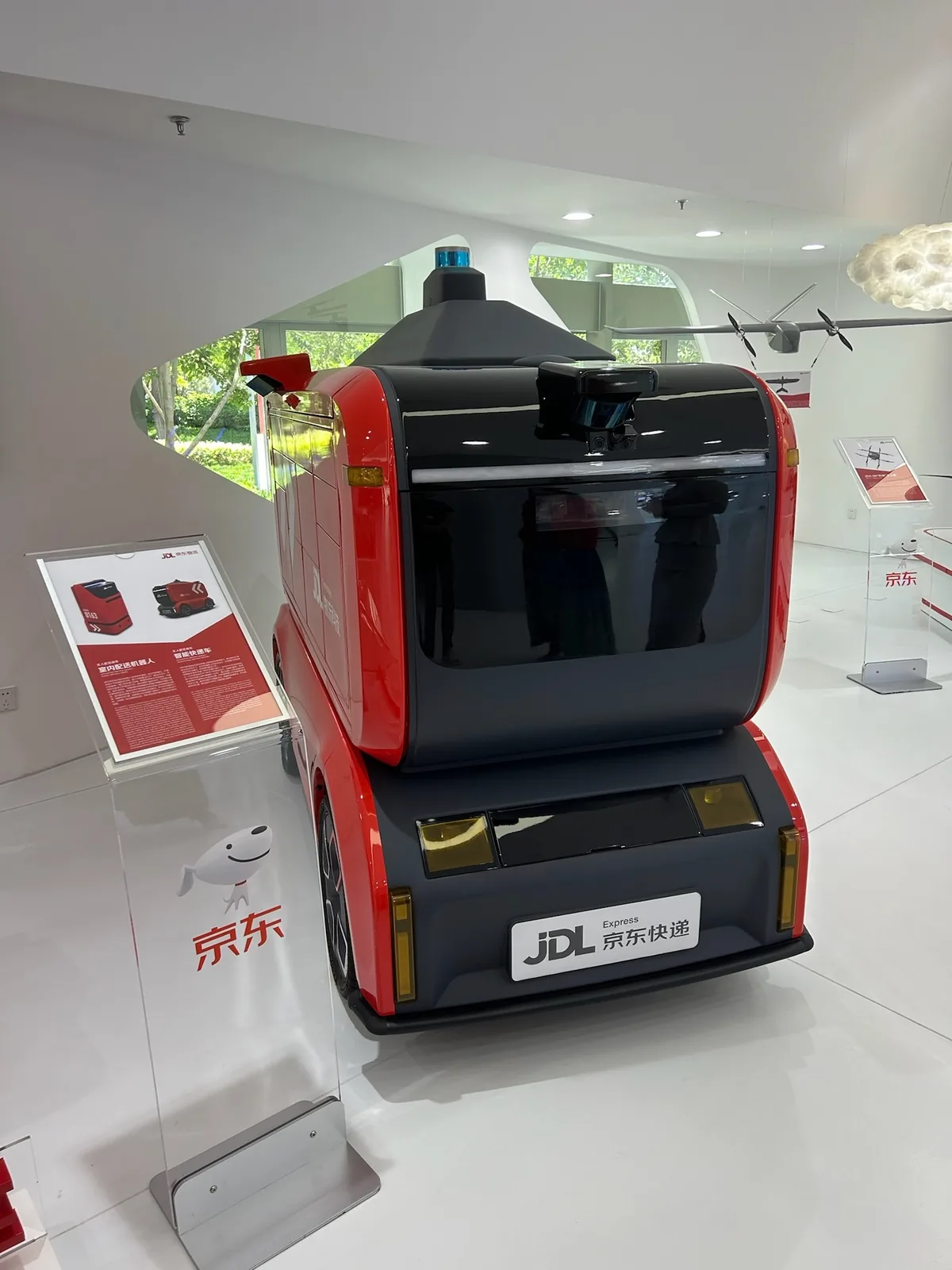
Alibaba is the more clearly advertised stop. Official Hangzhou tourism materials describe the Xixi visitor centre as presenting corporate culture to domestic and foreign visitors, and Xincherli as a new-retail demonstration. As of 9 July 2026, an official Hangzhou Tourism page still listed a group-reservation visit to the Alibaba Global Headquarters AI Smart Campus, 09:00–17:00. A 27 April 2026 official city report of the 150-plus foreign-company delegation said that at Alibaba they “examined infrastructure built for peak e-commerce traffic,” and that the tour also took in Cainiao on packaging algorithms and smart logistics. A September 2025 Fudan University visit included the Xixi exhibition hall and corporate-history exhibition, then a briefing that used Qwen as a case of Alibaba’s open-source approach. The official booking route is that group-reservation channel, a hosted programme, or a requested brief; we did not find a public self-service ticket page on Alibaba Group’s own site. The Shanghai and Hangzhou tech tour and our consumer and e-commerce expedition both treat the Hangzhou campus as a requested stop, not a drop-in attraction.
JD Logistics Asia No.1
Asia No.1 is a network, not a single warehouse. As of 30 June 2026, JD Logistics operated 46 Asia No.1 smart industrial parks in 31 cities across China, according to its interim report filed with the Hong Kong stock exchange. We have not verified 2026 robot-count or daily-throughput figures for a named site. What guests have been shown is documented in at least one official 2026 programme: on 8 April 2026, a CCPIT Beijing study group of more than 60 Malaysian young entrepreneurs visited an automated high-bay warehouse and an intelligent sorting workshop at a JD Asia No.1 park, then held a discussion with JD Logistics. We found no official JD public booking page. The documented route is a chamber, CCPIT or official exchange programme. Our Beijing tech tour article and the Alibaba and JD.com study tour set out the same distinction.
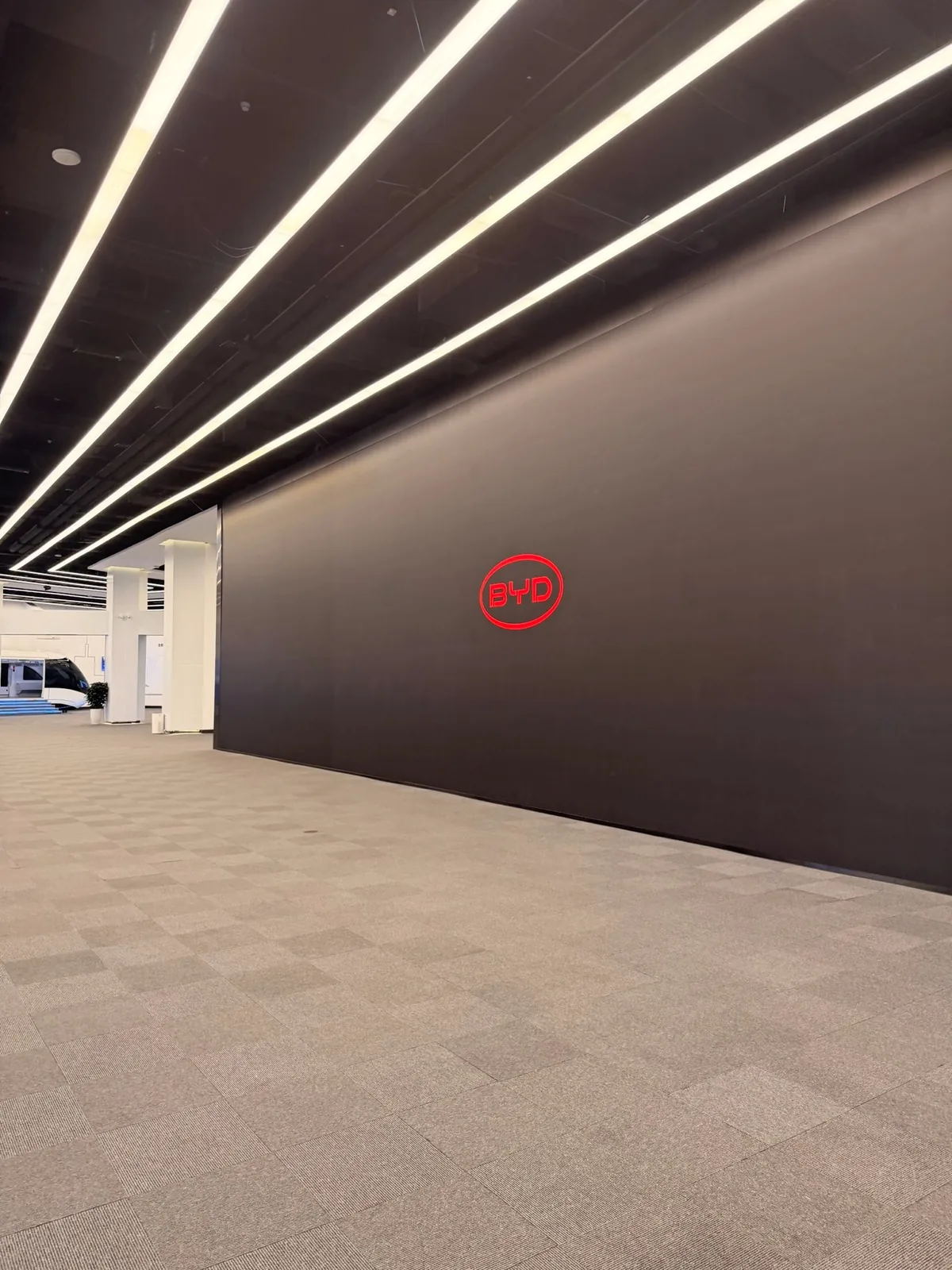
Other firms appear on Gate Kaizen’s own live pages as companies our delegations have met, or that we can add to a route, with access requested for each brief: Tencent, including Tencent Cloud International, on the deep-tech and AI expedition and the Shenzhen tech tour; BrainCo and DEEP Robotics; EHang, GAC, UBTECH Robotics and SenseTime; and, on the consumer route, JD.com, Baidu, Douyin and Xiaohongshu as well as Alibaba. BYD and DJI are also named on those pages as companies that can be requested. A name on that list is not an official public ticket, and we do not set out a 2026 visit script for BYD or DJI from government pages that did not load when we checked them. The photograph at the top of this article is a hall inside BYD’s campus in Shenzhen, taken during a Gate Kaizen expedition in March 2026; the caption is limited to what the frame shows.
What you see on a China company visit — and what you should not expect
The official reports support a short, practical list, not a promise that every later visit will follow the same script. You see what the host has agreed to show, usually with a guide in the room: an exhibition or visitor-centre walk; sometimes a guided look at a chosen workshop, line or warehouse area; sometimes a demonstration; and a briefing or discussion.
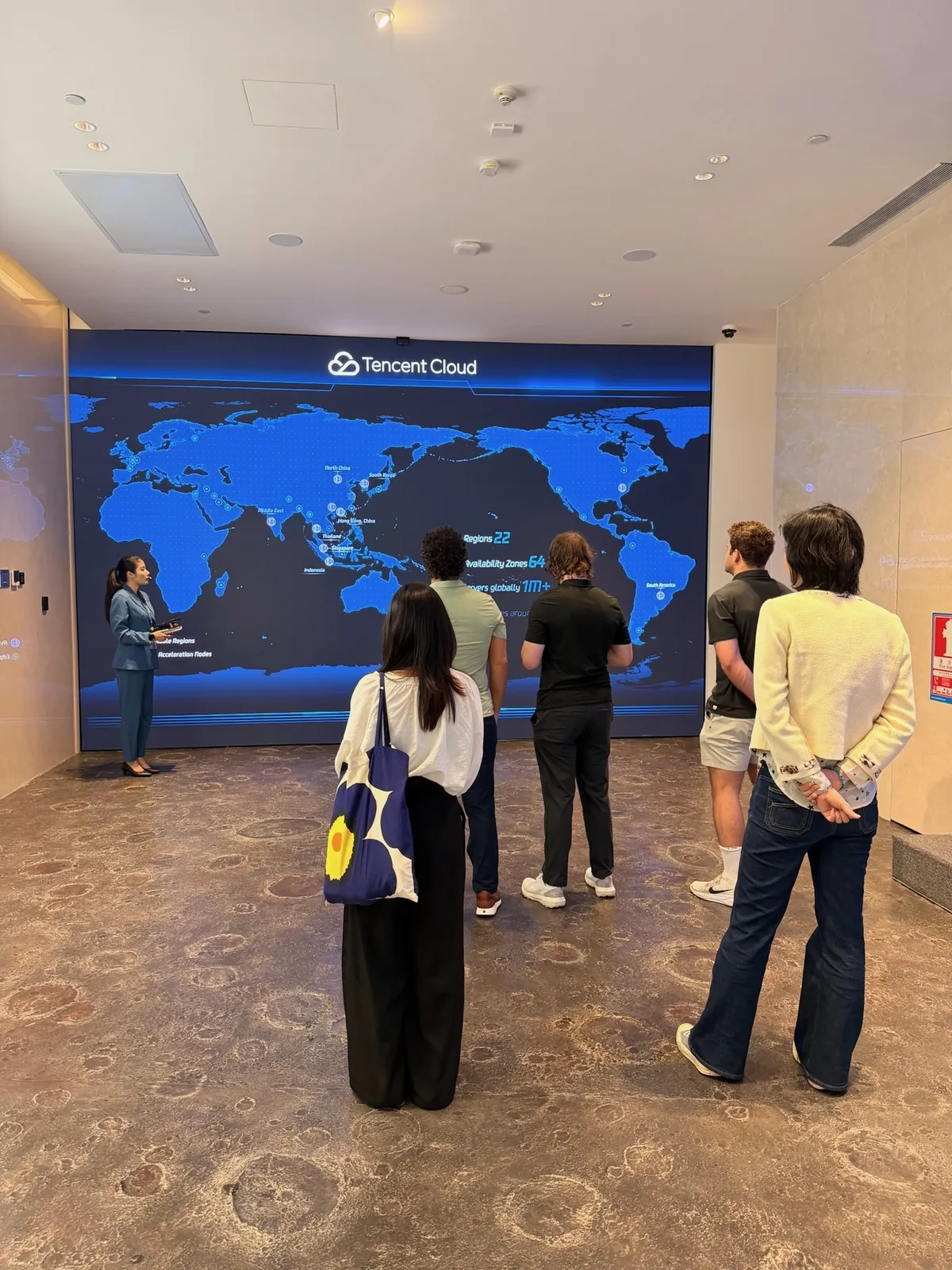
The photograph below, from Tencent’s Binhai campus in Shenzhen, is that first kind of moment on a Gate Kaizen route: a hosted exhibition briefing, not a walk through a data centre or a factory floor. Our live deep-tech page already records a walkthrough of Tencent’s global cloud and AI infrastructure with its international business unit. The Xiaomi, Unitree, Alibaba and JD write-ups above are the official examples of the other elements — a line tour and a track ride, an inspection of robots and components, a visitor centre and a model briefing, a high-bay warehouse and a sorting workshop. Those are valuable rooms to be in. They are not a licence to review payroll, interview workers in private, or walk an entire shop floor at will. A showroom robot in an incubator, a park or a mall is also not the same thing as being inside that company’s own factory.
A China company visit is not a factory audit
The distinction is the one most often blurred in search results for a China company visit. A social or ethical factory audit, as defined by Sedex — the organisation behind SMETA, a widely used buyer audit — is “a formal verification of a business’s social and ethical performance” at a specific employment site. The on-site stage, on Sedex’s own glossary, includes a physical inspection of premises, which can include production floors, dormitories and canteens; a document review of payroll, timesheets, contracts and licences; management interviews; and confidential worker interviews. Findings are written as non-compliances, and the supplier must produce a corrective-action plan. The purpose is compliance with labour law and a buyer’s code of conduct, not hospitality or business development.
None of the official company-visit write-ups we rely on describe that work. A Gate Kaizen company visit should not be called a factory audit, and we do not promise audit-level access — a full shop floor, documents, or worker interviews — on the basis of a hosted delegation tour. Teams that need an audit should commission one separately. A sourcing visit is a third brief. Our sourcing and factory-visit expedition is built for buyer groups and procurement leaders who need to walk pre-screened factory floors and meet owners directly. That is closer to an operational look at a plant than a headquarters exhibition is, and it is still not a social-compliance audit unless an audit is planned on its own.
How a China company visit is built into a Gate Kaizen expedition
The length, the cities and the companies are set with each group around the agenda, not copied from a fixed public timetable. The steps below are how we build the visits into a route, using the wording already on our live expedition pages.
Access and agenda
We start with a strategic brief: the objectives, the target sectors, the companies and the decisions the trip has to inform. We then pre-screen and schedule the companies, decision-makers, factories and partners that match that brief. Access is requested for each brief and confirmed with each company. A consumer and e-commerce route and a deep-tech and AI route will not ask for the same rooms, even when both include a visit in Hangzhou or Beijing.
Dates and price
Dates are on request, set with each group around your agenda. Pricing depends on group size and programme; we send a tailored quote after your enquiry. There is no published starting price, and we do not invent a 2027 departure calendar. The live expedition pages list inclusions such as corporate visits and official briefings, senior bilingual guides and technical interpreters, domestic transport and a visa invitation letter. International flights, personal extra meals and visa costs, when a visa is required, are not included.
Visas for 2027
Ordinary-passport holders from Spain and most (not all) EU countries, the United Kingdom, Canada, and from several Latin American countries can currently enter China visa-free for up to 30 days for business, until 24:00 on 31 December 2026, Beijing time. As of 19 November 2026, no general extension into 2027 had been announced; the Ministry of Foreign Affairs said it was seriously studying the relevant policy. Nationality details, including Mexico, Colombia, Ecuador and Paraguay, are in the FAQ below. For trips in 2027, check the Chinese embassy in your country before booking.
If you are comparing this brief with a city route, the live Shenzhen, Shanghai and Hangzhou and Beijing tech-tour articles, and the Alibaba and JD.com study tour, use the same source base.
Frequently asked questions about a China company visit
What is a China company visit?
A China company visit is a hosted meeting inside a Chinese firm for a foreign business delegation: usually a briefing, an exhibition or visitor-centre walk, and, when the host agrees, a guided look at a chosen production or logistics area. It is arranged for a specific brief, not sold as a walk-up ticket, and it is not a factory audit.
Which Chinese firms host foreign delegations?
Official 2024–2026 records describe foreign delegations at Xiaomi’s EV factory in Beijing E-Town, Unitree in Hangzhou, Alibaba and Cainiao in Hangzhou, and a JD Asia No.1 logistics park. Hangzhou tourism still advertised a group-reservation visit to Alibaba’s campus as of July 2026. Gate Kaizen’s live expedition pages also list companies our delegations have met, or that can be added to a route, including Tencent, BrainCo, DEEP Robotics, EHang, JD.com, Baidu, Douyin, Alibaba, and, where a brief supports it, BYD and DJI. Access is requested for each brief. A company name on that list is not a public ticket.
What do you actually see inside the company?
It depends on what the host approves. Official write-ups describe an exhibition or visitor centre, a guided look at a chosen workshop, line or warehouse area, sometimes a demonstration or test ride, and a briefing or discussion. Documented examples include Xiaomi’s November 2024 vehicle display, line tour and track ride; Unitree’s April 2026 inspection of quadruped robots and components; and an April 2026 JD Asia No.1 visit to a high-bay warehouse and a sorting workshop. None of that is an unescorted walk-through, and none of it is a factory audit.
Is a China company visit the same as a factory audit?
No. A hosted company visit is usually a briefing, a showroom, an exhibition hall or a demonstration line, arranged as business hospitality. A social-compliance audit, as Sedex defines it, is a formal check of a site’s social and ethical performance, including payroll and document review, confidential worker interviews and a corrective-action plan. Teams that need an audit should plan one separately. A sourcing factory visit, of the kind described on our sourcing expedition page, is also a different brief: pre-screened factory floors and meetings with owners, not an audit unless one is commissioned on its own.
Do I need a visa for a business trip to China?
It depends on your passport. Ordinary-passport holders from Spain and most (not all) EU countries, the United Kingdom, Canada, and from Argentina, Brazil, Chile, Peru and Uruguay can currently enter China visa-free for up to 30 days for business, until 24:00 on 31 December 2026, Beijing time. Czech and Lithuanian passports are not on that 30-day list. Mexico is eligible for 240-hour visa-free transit only; Colombia, Ecuador and Paraguay are on neither official list we checked. As of 19 November 2026 no general extension into 2027 had been announced. For trips in 2027, check the Chinese embassy in your country before booking.
How long should the trip be, and what does it cost?
The length and the dates are set with each group around the agenda. Pricing depends on group size and programme; we send a tailored quote after your enquiry. There is no published starting price, and we do not publish a fixed 2027 departure calendar.
Plan a China company visit with Gate Kaizen
Company visits sit at the centre of every Gate Kaizen expedition. Each route is bespoke, designed around your own agenda, and access is requested for each brief. Dates are set with each group. Pricing depends on group size and programme; we send a tailored quote after your enquiry.