A Beijing tech tour is how many investors and leadership teams close a China deep-tech itinerary: a look at the large-model labs and research institutes of Haidian, and at the robotics corridor in Yizhuang, in the same city that writes a good deal of the policy around both. It is a working visit, built around meetings that have to be requested, not a walk through public parks that happens to pass a famous logo.
This article is for founders, investors and corporate innovation teams planning that capital stop. It sets out what is documented in Haidian, what Yizhuang now puts on display, which visits we can name from our own expeditions, and how Beijing sits next to Shenzhen, Hangzhou and Shanghai. For the commercial programme, see our Deep-Tech & AI expedition. Readers comparing listing routes and co-investors may also want our China investor tour article.
Key takeaways
- Haidian holds a dense large-model cluster. Official-media reporting in January 2026 put more than 1,900 AI firms and 122 registered large models in Haidian, nearly 60 per cent of Beijing’s total, and 209 registered large models in the city, nearly 30 per cent of the national total. Zhipu, incubated by Tsinghua and based in Tsinghua Science Park, listed in Hong Kong on 8 January 2026 (Beijing Daily via NCSTI, 9 January 2026).
- A named model is not a public tour. The same report places Baidu’s ERNIE, Zhipu’s GLM, Doubao and Moonshot’s Kimi in Haidian’s ecosystem. That is not the same as a walk-in laboratory visit. On our October 2026 AI expedition, Gate Kaizen visited ByteDance and Baidu in Beijing as hosted campus and exhibition meetings, not as open lab tours.
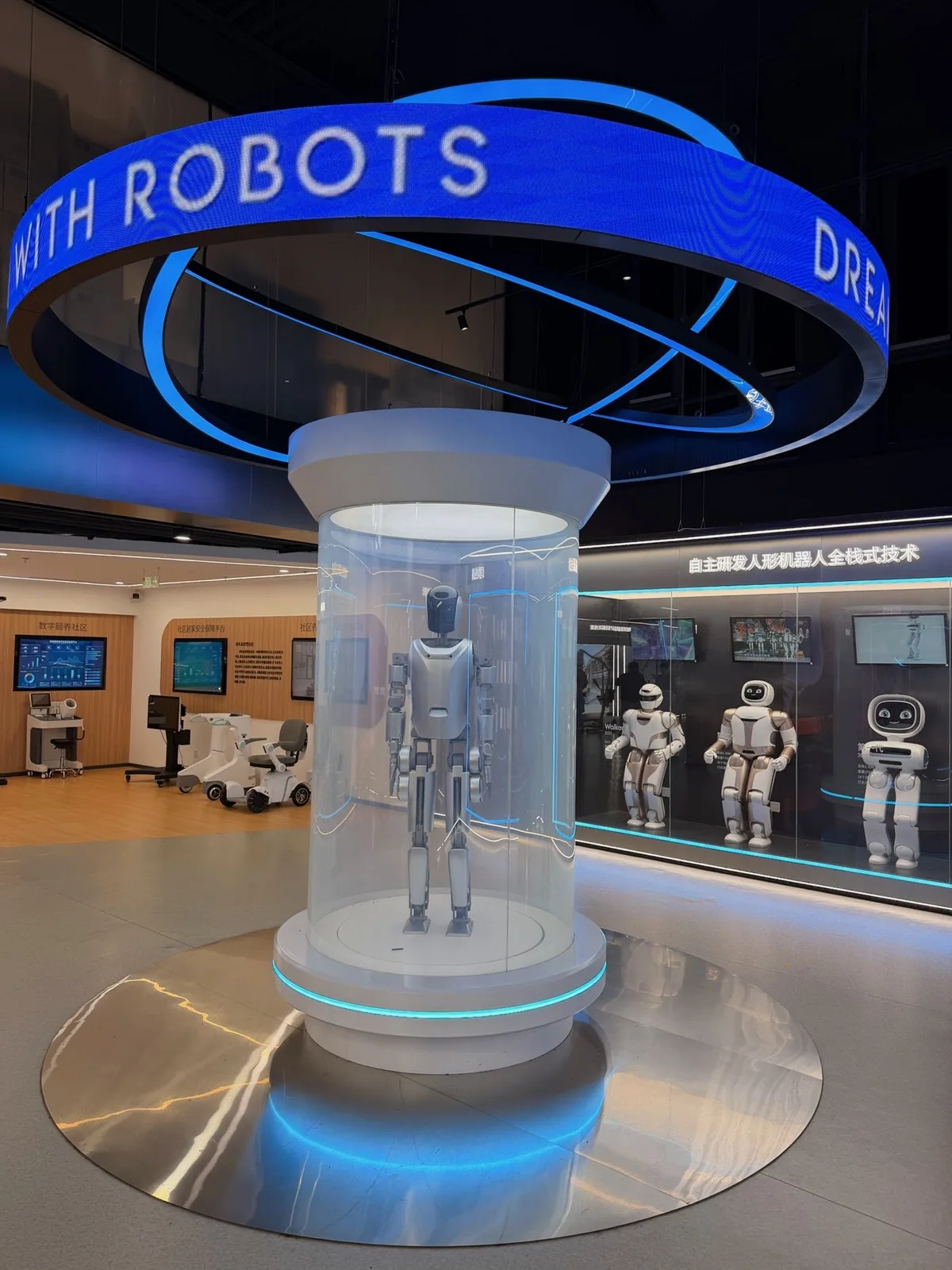
- Yizhuang is a robotics corridor with a public face. Robot Mall, described by official municipal sources as the world’s first embodied-intelligence 4S store, opened on 8 August 2025 and was still treated as current in official coverage on 16 November 2026. The area hosted a humanoid-robot half marathon on 19 April 2026.
- Policy is fresh, and dated. Beijing issued an action plan for the high-quality development of the embodied-intelligent robot industry on 11 November 2026, valid until 31 December 2028. Official E-Town figures published on 16 November 2026 describe a humanoid pilot-validation platform with annual capacity of 5,000 units and a super factory whose planned capacity ramps through 2026 and 2027.
- Plan 2027 entry now. The 30-day visa-free arrangement for ordinary passports from Spain, most EU countries, the United Kingdom, Canada and several Latin American countries runs until 24:00 on 31 December 2026, Beijing time. As of 19 November 2026 no general extension into 2027 had been announced.
What a Beijing tech tour actually covers
Beijing answers a different question from Shenzhen or from the Shanghai–Hangzhou corridor. If the brief is “how is hardware built at scale?”, the first city is usually Shenzhen. If it is “how do platforms and applied AI meet customers and factories?”, Shanghai and Hangzhou are the natural pair. A Beijing tech tour is for teams that also need to see where large models are being built, where robotics is being industrialised in the capital, and how municipal policy is being written around both.
Our executive study tour article already puts Beijing at the policy and research end of a leadership-team week. That remains the right frame. What has changed in 2026 is the amount of official, dated detail around Yizhuang: a public 4S store, a second humanoid half marathon, manufacturing-capacity figures, and a municipal action plan issued in November 2026 that runs through 2028.
The visits themselves are still hosted. Official public programmes in Haidian take guests through science parks and exhibition halls. Company campuses, when they open, typically offer a briefing or an exhibition rather than a laboratory bench or a production audit. That distinction matters. It is also why a Gate Kaizen route is designed around a brief, then requested company by company, rather than sold as a fixed public ticket.
Haidian: large-model companies, research institutes and public park routes
Haidian, and Zhongguancun within it, is the dense end of Beijing’s model-lab story. A 9 January 2026 Beijing Daily report, carried on the National Center for Science and Technology Information site, said Zhipu — incubated by Tsinghua and headquartered in Tsinghua Science Park — had listed on the Hong Kong Stock Exchange on 8 January 2026, and described the listing as the first for a company whose core business is a general-purpose AI foundation model.
The same article said that within a few hundred metres of Tsinghua Science Park in Wudaokou a visitor can walk to Zhipu, ModelBest (面壁智能), Shengshu Technology (生数科技) and the Beijing Academy of Artificial Intelligence (BAAI). It put more than 1,900 AI firms and 122 registered large models in Haidian, nearly 60 per cent of Beijing’s total, and 209 registered large models in the city, nearly 30 per cent of the national total. Treat those counts as official-media reporting as of early January 2026, not as a visitor-programme catalogue, and not as figures we re-counted ourselves.
The same report names Baidu’s ERNIE assistant, Zhipu’s GLM, Doubao and Moonshot’s Kimi as models present in Haidian’s ecosystem. That is a map of the industry, not a confirmed walking tour of ByteDance or Moonshot headquarters, and it is not evidence of a public visitor centre at any of those firms. We did not find an official, on-demand programme that walks a foreign executive into Zhipu, Moonshot, Baichuan or Baidu laboratories.
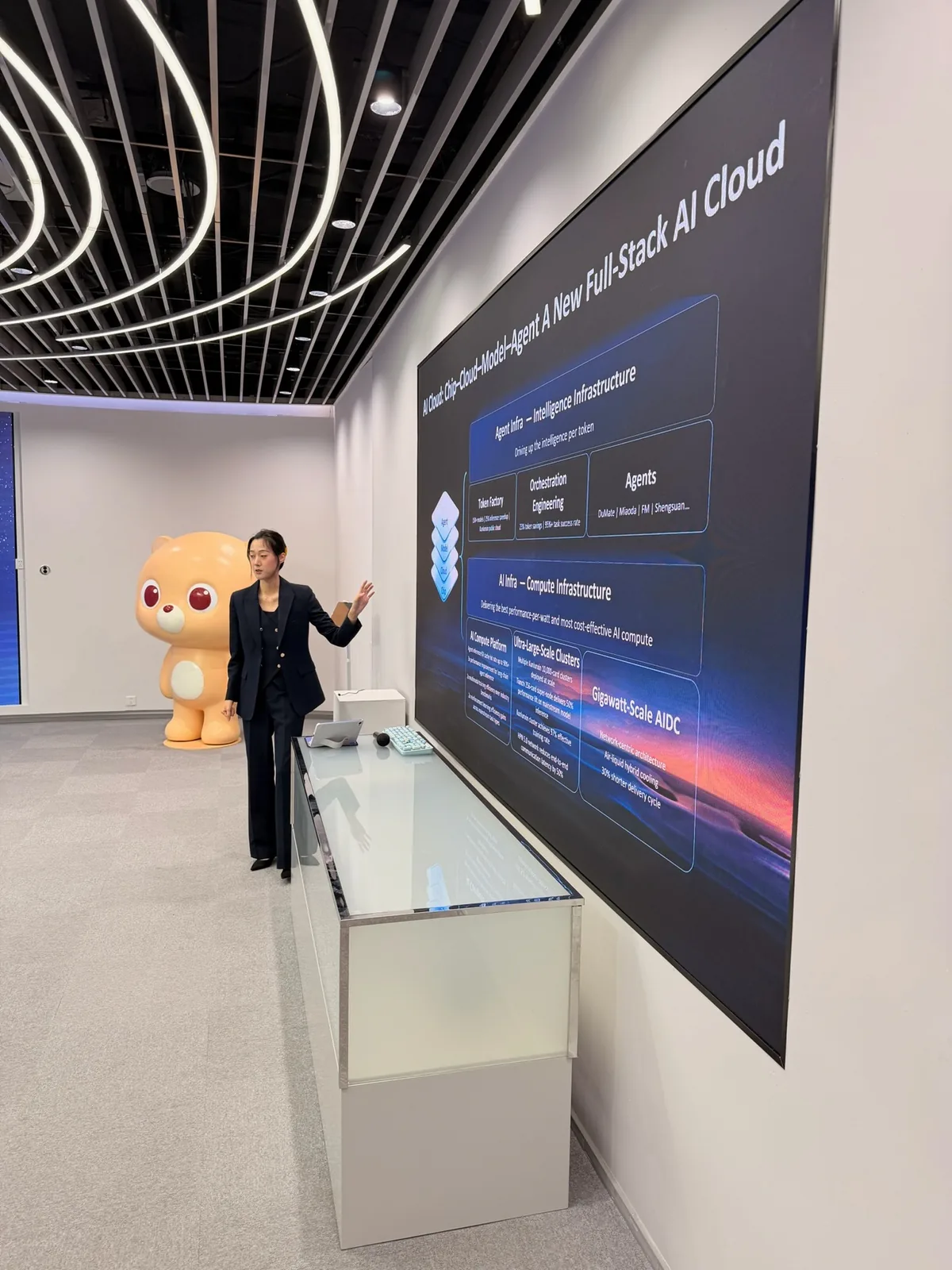
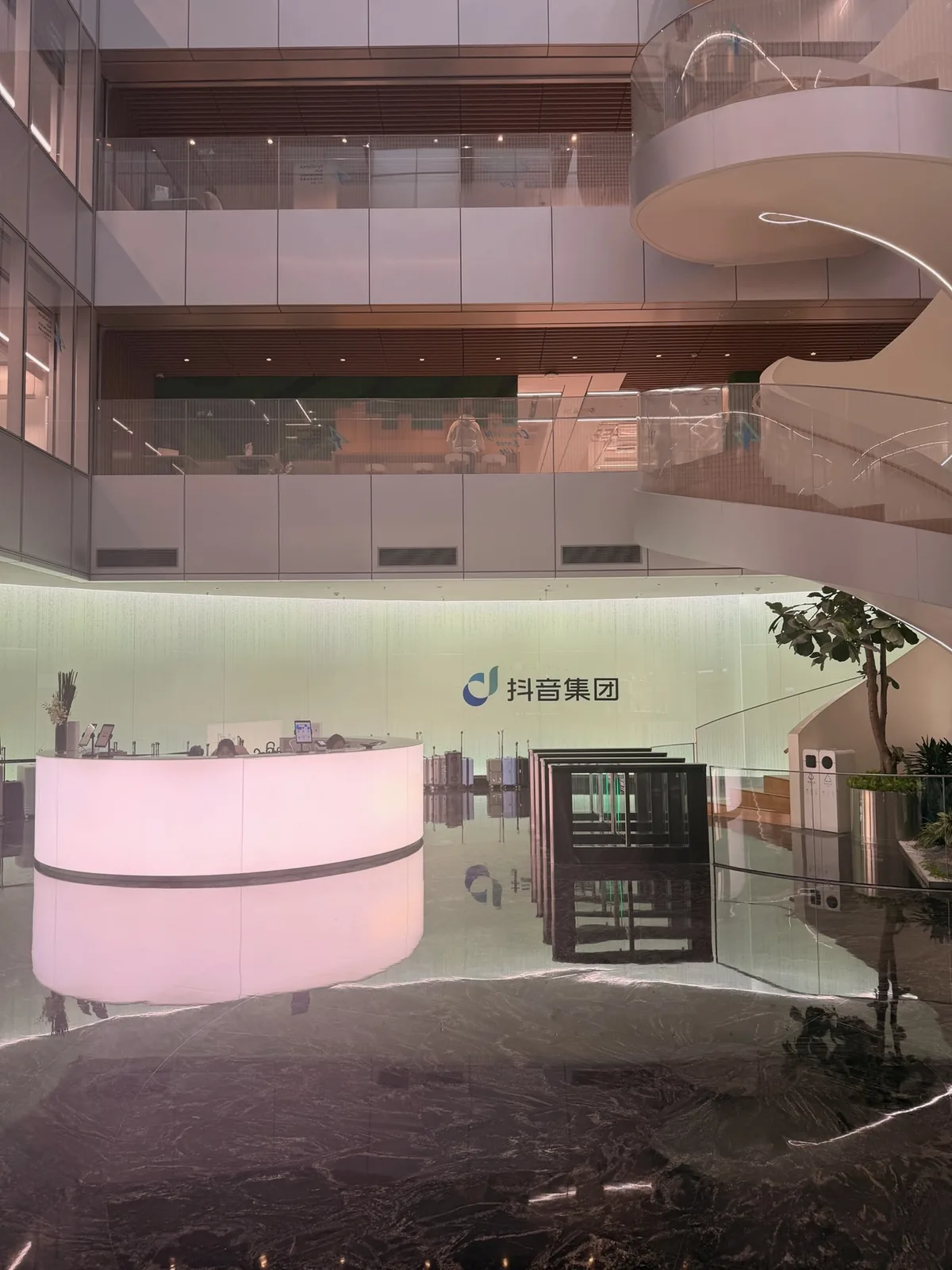
What we can name first-hand is narrower, and more useful. In October 2026, Gate Kaizen led a private delegation of Latin American founders and investors through Shanghai, Hangzhou and Beijing. In the capital the group visited ByteDance and Baidu, including exhibition and campus sessions. Those meetings were arranged for that expedition. They are not a standing public tour, and they should not be written up as access to model-training clusters or source code.
Haidian does have a public, reservable science-park programme, and it is worth keeping separate from those company visits. From 8 August 2026 Beijing launched three public tour routes covering ten sci-tech parks in Haidian, reserved through an official WeChat account. Official English coverage groups them into southern, central and northern routes, with interactive examples such as a robot beverage station at AI Genesis Community and exhibits at the Zhongguancun AI North Latitude Hub (english.beijing.gov.cn, 10 August 2026).
That is a public park-tour programme, not access to Zhipu or Moonshot laboratories. The 2026 Zhongguancun Forum also ran a science-park visit programme for forum guests on 27 March 2026, hosted by Haidian District Government, including Zhongguancun AI North Latitude Community and the Zhongguancun No. 1 precinct (Beijing Municipal Science and Technology Commission, 23 March 2026). It was a forum side event, not an on-demand executive booking desk. A well-planned Beijing tech tour can use a park route for context and still treat named company meetings as a separate, requested layer.
Yizhuang: the robotics corridor, a 4S store and a race
If Haidian is where models and research institutes cluster, Yizhuang — the Beijing Economic-Technological Development Area, or Beijing E-Town — is where the capital has been concentrating robotics as an industry. Official descriptions of Zhongguancun (Yizhuang) International Robotics Industry Park, updated on 23 September 2026, present it as a landmark robotics park in the area, with a gross floor area of 250,000 square metres and nearly 100 enterprises across humanoid robots, medical robots, special robots and core components. Typical institutions named on that official investment page include the Beijing Humanoid Robot Innovation Center and UBTECH Robotics (invest.beijing.gov.cn, 23 September 2026).
The most visible public format is Robot Mall, described by official municipal sources as the world’s first embodied-intelligence 4S store (sale, spare parts, service and survey). It opened on 8 August 2025, coinciding with the World Robot Conference, at about 4,000 square metres over four floors, with more than 50 robot products from 40-plus manufacturers. Official lists of exhibits included Tienkung (天工) from the Beijing Humanoid Robot Innovation Center, Unitree G1 and UBTECH Walker S (Beijing Municipal Science and Technology Commission, 7 August 2025, and english.beijing.gov.cn, 12 August 2025).
As of 16 November 2026, official E-Town coverage still treated Robot Mall, the robot restaurant and “Robot World 3.0” as current formats, and said the new municipal action plan supports iterating Robot World’s functions. We found no official closure notice. A visit to a 4S store or a theme-park format is a public-facing showroom, not a tour of the factory that built the machines on display.
The area has also used sport as a demonstration. The 2026 Beijing E-Town Half Marathon and Humanoid Robot Half Marathon was held on 19 April 2026. Official municipal reporting said more than 100 humanoid-robot teams and 12,000 human runners took part. The robot champion was “Lightning” (闪电) of team 齐天大圣, in 50 minutes 26 seconds. The field was described as nearly five times larger than the previous year, with teams from more than 11 provinces and five international teams, including Germany, France, Portugal and Brazil (beijing.gov.cn, 21 April 2026).
Company counts in official writing vary slightly by date, and should be quoted that way rather than merged into one number. On 11 August 2025, beijing.gov.cn said robotics and intelligent-manufacturing ecosystem firms in E-Town already exceeded 300, covering core parts, complete machines, systems integration and scenario solutions. The next day, official English coverage citing Xinhua said E-Town was “home to more than 300 enterprises in the sector,” with a robotics industry chain valued at more than 10 billion yuan, about half of Beijing’s robotics output. The 21 April 2026 race report said E-Town had attracted more than 300 embodied-intelligence ecosystem firms, and named 星海图, 云际 and 本末 among them.
Capacity figures are more recent. Official coverage on 16 November 2026 said E-Town had built the Beijing Humanoid pilot-validation platform and “Jing-Jin-Ji’s first 10,000-unit-class embodied-intelligence robot super factory.” The pilot-validation platform is described as offering trial production, process validation, process optimisation, module and complete-machine assembly, and testing, with current annual capacity of 5,000 units (sets). The super factory is identified as Lingyi Intelligent Manufacturing’s Beijing super factory (领益智造北京超级工厂); official text says planned annual capacity ramps to 10,000 units in 2026, 20,000 in 2027 and 500,000 in 2030 (beijing.gov.cn, 16 November 2026). Those are official planned-capacity figures, not production we have counted on a visit.
On our October 2026 AI expedition, the group also had a briefing session at UBTECH in Beijing. UBTECH is named on the official Yizhuang park roster, and the company is one of the few humanoid makers already selling into industrial settings — a point we have discussed on the live model-race article. That briefing was a hosted company visit. It was not a factory audit, and we do not treat it as access to a mass-production line.
Policy in the capital, written down to 2028
Beijing is also where the next few years of robotics policy have just been written down. The Beijing Municipal Bureau of Economy and Information Technology issued the “Beijing Action Plan for High-Quality Development of the Embodied Intelligent Robot Industry (2026–2028)” on 11 November 2026 (Jing Jingxin Fa [2026] No. 54). It took effect on issuance and remains valid until 31 December 2028 (beijing.gov.cn).
Stated 2028 goals in that plan include: cultivating no fewer than five internationally first-class and ten domestically leading humanoid complete-machine firms; Jing-Jin-Ji regional complete-machine capacity accounting for 25 per cent of the national total, with a key-parts supporting rate above 60 per cent; and building Beijing into an internationally first-class source of embodied-robot technology and an industrial innovation highland.
Other official targets in the same document that would matter to a 2026–2027 delegation include 200,000 units a year of complete-machine production capacity in Beijing; continuing the “two conferences and one race” brand (the World Robot Conference, the humanoid games and the half marathon); support for iterating Robot World and for building E-Town into a concentrated demonstration zone; and encouragement for foreign firms to set up R&D and manufacturing bases in Beijing.
A Beijing-Tianjin-Hebei Robot Industry Chain Working Committee was established in E-Town, reported on 28 January 2026, to coordinate scenarios, investment attraction and policy among the three jurisdictions. Together with the November action plan, that is the official Jing-Jin-Ji frame for robotics. It is not a fourth, government-branded “innovation tour,” and it should not be sold as one. It is the policy setting in which a Yizhuang visit now sits.
We should be precise about what Gate Kaizen has and has not done in this layer. Our last deep-tech expedition included a high-profile government meeting in Shanghai, with the Jing’an District Mayor, not a counterpart session in Beijing that we can name on a live page. A Beijing policy conversation, if it is added to a route, is requested like any other official meeting and confirmed case by case.
How a Beijing tech tour fits a wider route
A four-city week that includes Shenzhen, Hangzhou, Shanghai and Beijing crosses three official regional strategies: the Guangdong-Hong Kong-Macao Greater Bay Area, the Shanghai (Yangtze River Delta) International Science and Technology Innovation Center, and Jing-Jin-Ji. That is a programme choice, not an official corridor or a government product called a 2027 innovation tour. It is a reason to be deliberate about why Beijing is on the itinerary, not a reason to add it by default.
Our deep-tech sample route still runs from Shenzhen to Hangzhou and Shanghai. Beijing is the add-on when the brief needs large-model companies, research institutes, or the Yizhuang robotics cluster. Investors who are also weighing listing routes, state capital and co-investors will find that discussion in the investor-tour article; the company-level model conversation is in what we saw at ByteDance, Baidu and beyond.
The table below is a planning aid for the Beijing stop itself, not a day-by-day timetable.
| Theme | Where | What visiting teams typically look at |
|---|---|---|
| Large models and research institutes | Haidian / Zhongguancun | A dense cluster of registered models and firms around Tsinghua Science Park; public science-park tours; hosted campus or exhibition visits where a company agrees, as with ByteDance and Baidu on our October 2026 expedition |
| Robotics industry and public demonstration | Yizhuang / Beijing E-Town | Robot Mall and Robot World as public-facing formats; official ecosystem of more than 300 firms; pilot and super-factory capacity described in November 2026 official coverage; hosted briefings such as UBTECH in October 2026 |
| Policy through 2028 | Municipal and E-Town official meetings, when granted | The 11 November 2026 embodied-robot action plan and Jing-Jin-Ji coordination. Official meetings are requested, not assumed |
Planning a Beijing tech tour for 2027
Four practical points shape a Beijing stop.
Entry rules
Ordinary-passport holders from Spain and most (not all) EU countries, the United Kingdom, Canada, and from Argentina, Brazil, Chile, Peru and Uruguay can currently enter China visa-free for up to 30 days for business, until 24:00 on 31 December 2026, Beijing time. As of 19 November 2026 no general extension into 2027 had been announced; the foreign ministry said the policy was being “seriously studied.” For 2027 trips, check the Chinese embassy in your country before booking.
Timing
Official E-Town programming still highlights the World Robot Conference, the humanoid games and the half marathon as a continuing “two conferences and one race” brand in the November 2026 action plan. Those events can be worth timing a visit around if demonstration and industry gathering are the point, but 2027 dates should be confirmed with the organisers. Company visits are usually easier to arrange outside Chinese public holidays, and they always depend on the host.
Access
Public science-park routes in Haidian and the Robot Mall format in Yizhuang are the most clearly advertised layers. Named visits to ByteDance, Baidu, UBTECH or other firms are hosted: requested for each brief and confirmed with the company. Expect an exhibition hall, a briefing room or a showroom unless a factory visit has been separately agreed. A hosted visit is not a factory audit.
Who it suits
Investors and operators looking at large-model companies or humanoid and industrial robots; corporate innovation teams that need to see how Beijing’s policy and Yizhuang’s industrial cluster are being built; and leadership groups already covering Shenzhen or the Shanghai–Hangzhou corridor who need the capital stop to complete the picture. It is a weaker use of time for a purely consumer or sourcing brief.
Frequently asked questions about a Beijing tech tour
What is a Beijing tech tour?
A Beijing tech tour is a structured business trip to see two sides of the capital’s technology sector: the large-model and research cluster in Haidian, and the robotics corridor in Yizhuang (Beijing E-Town). It can also include the policy conversation that sits around both. Named company visits are hosted and requested for each brief; they are not walk-in laboratory tours, and a showroom visit is not a factory audit.
Can we visit ByteDance, Baidu or Zhipu?
On our October 2026 AI expedition, the Gate Kaizen group visited ByteDance and Baidu in Beijing, including a campus and exhibition briefing rather than an open laboratory tour. Zhipu, which listed in Hong Kong on 8 January 2026, sits in the Haidian cluster around Tsinghua Science Park, but we found no official on-demand visitor programme that walks a foreign executive into Zhipu, Moonshot, Baichuan or Baidu laboratories. Access, when it is possible, is requested for that brief and confirmed with the host.
What is there to see in Yizhuang besides company meetings?
Yizhuang, officially the Beijing Economic-Technological Development Area, has a public-facing robotics offer as well as company sites. Robot Mall, described by official municipal sources as the world’s first embodied-intelligence 4S store, opened on 8 August 2025 and was still being treated as a current format in official coverage on 16 November 2026. The area also hosted the 2026 humanoid-robot half marathon on 19 April. Official figures describe an ecosystem of more than 300 firms. A Gate Kaizen route can include a showroom or a hosted briefing, such as the UBTECH session on our October 2026 expedition.
How does a Beijing leg fit a Shenzhen or Shanghai itinerary?
Beijing answers a different question from Shenzhen or the Shanghai–Hangzhou corridor. Shenzhen is where hardware is built at scale; Shanghai and Hangzhou are where applied AI, platforms and many robot startups sit; Beijing is where large-model companies, research institutes and a growing robotics manufacturing cluster are concentrated, under a municipal action plan that runs through 2028. Many deep-tech routes start in Shenzhen and continue to Hangzhou and Shanghai; Beijing is added when the brief needs the capital’s labs or Yizhuang.
Do I need a visa for a business trip to Beijing?
It depends on your passport. Ordinary-passport holders from Spain and most (not all) EU countries, the United Kingdom, Canada, and from Argentina, Brazil, Chile, Peru and Uruguay can currently enter China visa-free for up to 30 days for business, until 24:00 on 31 December 2026, Beijing time. Czech and Lithuanian passports are not on that 30-day list. As of 19 November 2026 no general extension into 2027 had been announced; China’s foreign ministry said it was seriously studying the policy. For trips in 2027, check the Chinese embassy in your country before booking.
Is a company visit the same as seeing a factory line?
No. Official and first-hand visits in Beijing are usually briefings, exhibition halls, showrooms or demonstration displays. That is valuable, but it is not a factory audit and it is not automatically access to a production line. If your team needs an audit or a shop-floor inspection, that has to be agreed separately with a different mandate.
Design your Beijing tech tour
Gate Kaizen’s China Innovation & AI Tour is built for venture capital and growth investors, corporate venture and innovation teams, deep-tech founders and CTOs. The sample route runs from Shenzhen to Hangzhou and Shanghai; Beijing can be included when the brief needs large-model labs or the Yizhuang robotics corridor, and every programme is tailored to your agenda. Pricing depends on group size and programme; we send a tailored quote after your enquiry.