
In October 2026, Gate Kaizen led a private delegation of Latin American founders and investors through Shanghai, Hangzhou and Beijing to meet the companies building China’s AI. Eight visits, one question: who is winning China’s model race, and how?
ByteDance: China’s biggest AI audience, and now video
Doubao, ByteDance’s AI assistant, is China’s most used AI app. QuestMobile’s first-half 2026 report puts it at 382 million monthly active users, more than Alibaba’s Qwen (167 million) and DeepSeek (130 million) combined.
Behind the app sits ByteDance’s Seed model family. Doubao-Seed-2.0, released in February, is positioned by ByteDance against GPT-5.2 and Gemini 3 Pro for reasoning and agent tasks, at token prices the company says are roughly an order of magnitude lower.
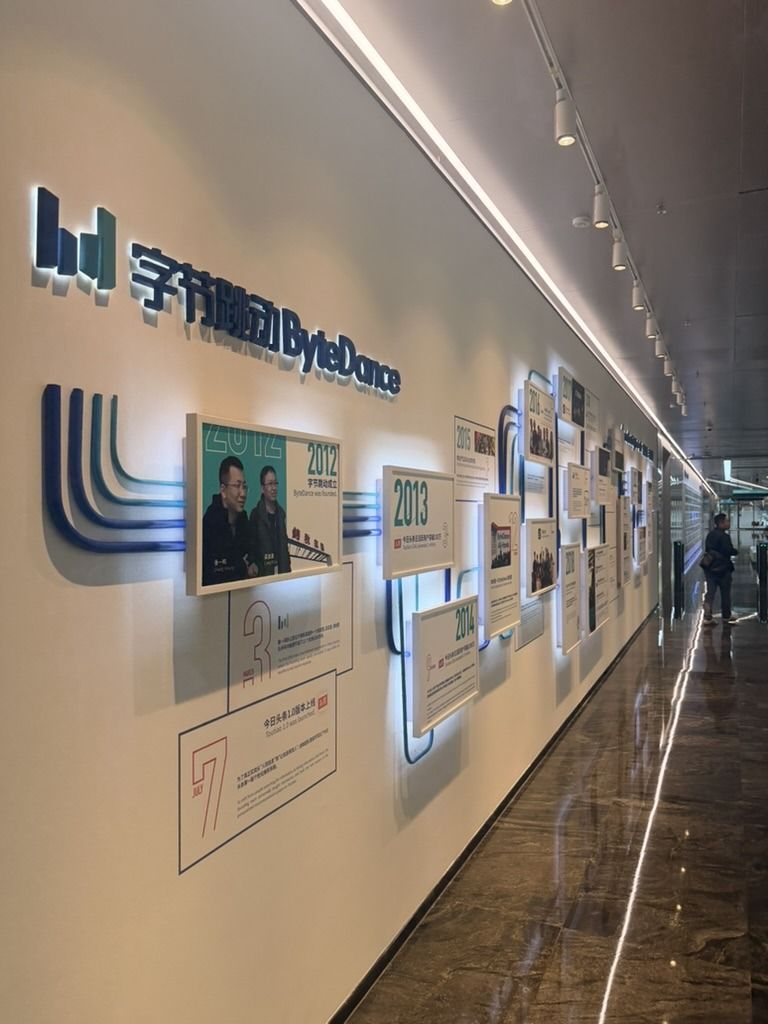
ByteDance history wall, Beijing
Where ByteDance pulls ahead is video. Seedance 2.0 generates picture and sound together (lip-synced dialogue, ambient audio, music) and cuts between several camera shots in a single pass. It also edits existing footage: users can change a region, a character, an action or the audio without reshooting. Since May it has been available inside CapCut for paying users in markets including Latin America, the United States and Europe, and it ranks in the top two of the main independent video leaderboards.
In July, Seedance 2.5 raised the bar again: 30-second clips in one run, up to 50 reference images, videos and audio files per prompt, and local editing that changes one detail of a scene, such as a character’s hair colour, without regenerating the whole clip.
The launch was not free of friction (Hollywood studios accused ByteDance of copyright infringement when Seedance 2.0 came out), but the strategic point is clear. ByteDance already owns the tools where people edit video, and it is building its best models straight into them.
Baidu: from first mover to full stack
Baidu was first to market with ERNIE Bot in 2023. In consumer apps it now sits behind ByteDance, Alibaba and DeepSeek, so it is competing on the whole stack rather than on the chatbot alone.
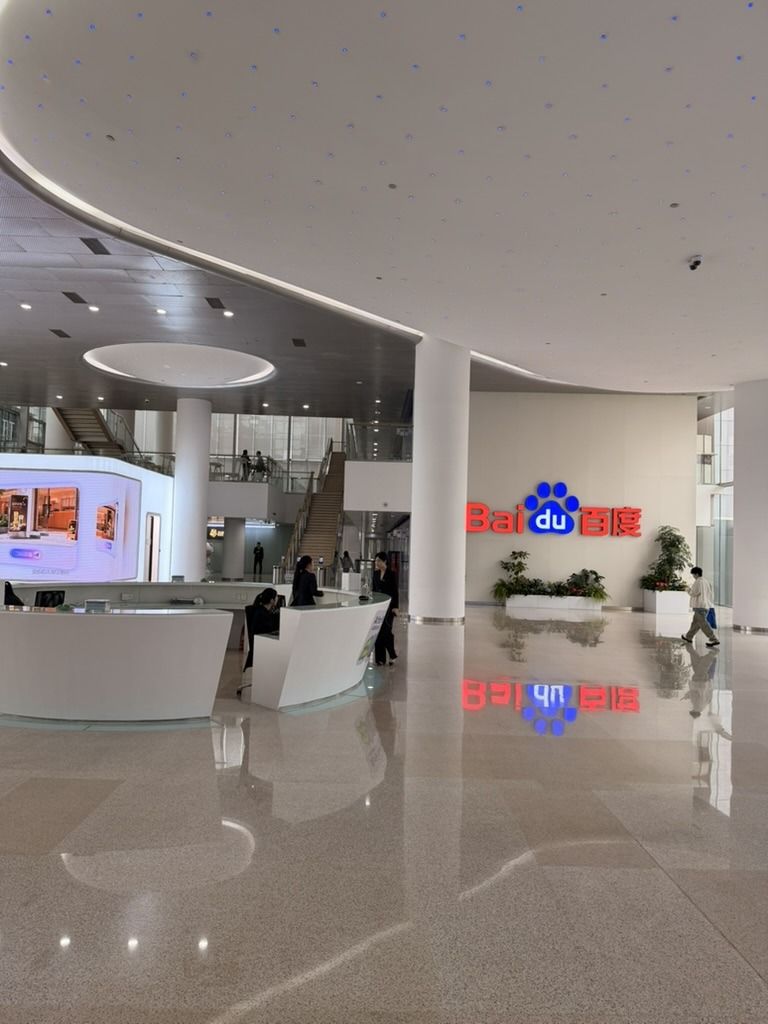
Baidu headquarters, Beijing
On models, ERNIE 5.0, unveiled in January, is a 2.4-trillion-parameter, natively multimodal model (text, image, audio and video) that activates less than 3% of its parameters per query; its preview ranked first among Chinese models on LMArena. ERNIE 5.1 followed in May at about a third of the size, trained, according to Baidu, for roughly 6% of the pre-training cost of comparable frontier models, and placed fourth globally on LMArena’s search leaderboard.
Beneath the models are Baidu’s own Kunlun AI chips and a cloud business whose GPU cloud revenue grew 283% year on year in the second quarter of 2026. AI-powered businesses now account for half of Baidu’s general business revenue. On the road, Apollo Go completed about one million fully driverless rides in the quarter (more than 23 million in total), launched commercial service in Dubai and started testing in London with Uber and Lyft (Baidu Q2 2026 earnings call).
Alibaba, SenseTime and the enterprise layer
In Hangzhou, Alibaba’s Qwen is China’s second-largest AI app and one of the most widely adopted open-weight model families worldwide, although its newest flagship, Qwen3.6-Plus, launched in April only through Alibaba Cloud and the Qwen app rather than as open weights. Alibaba is also in the video race: its HappyHorse-1.0 model trades the top leaderboard spots with Seedance.
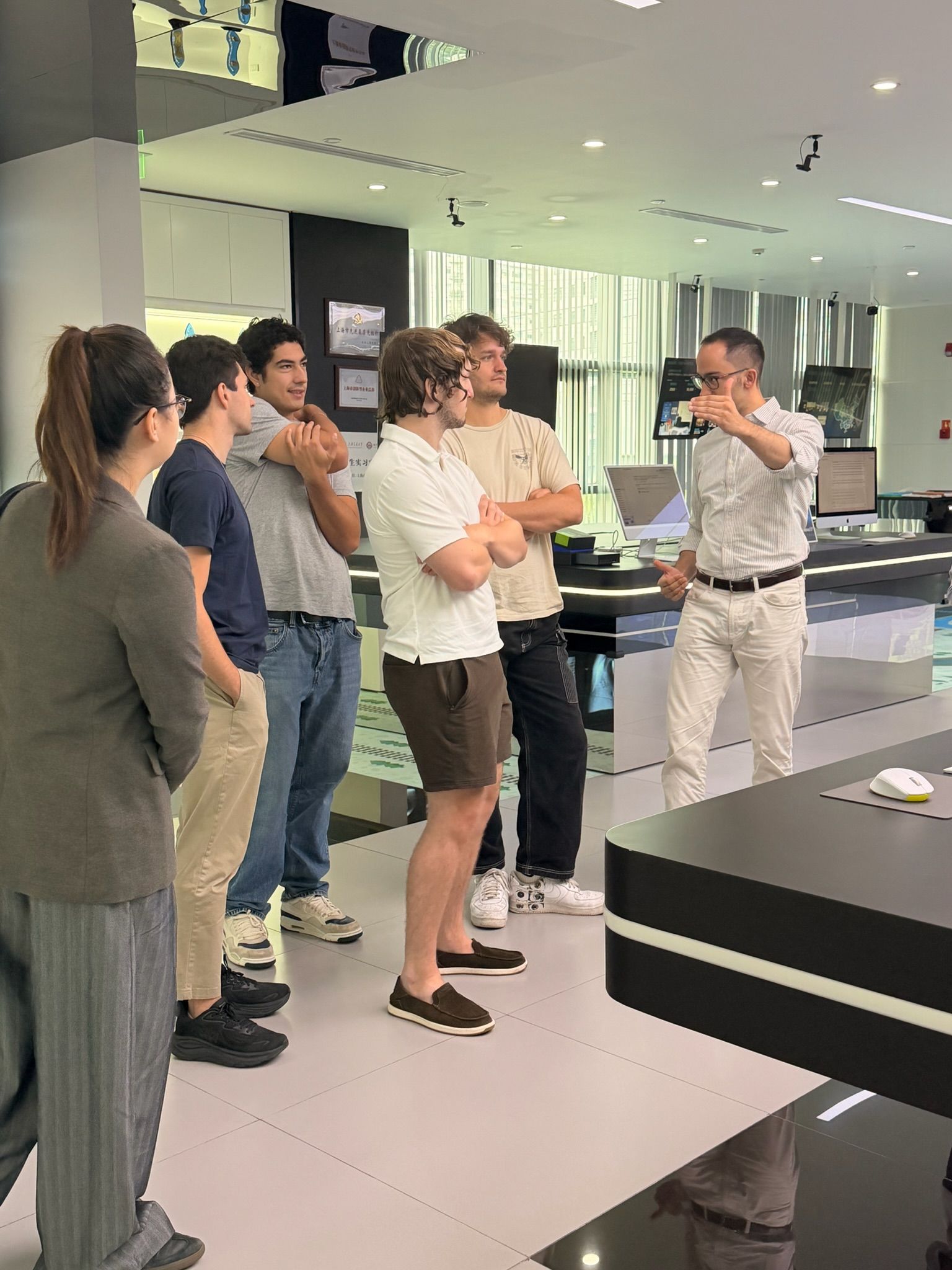
Touring the SenseTime AI exhibition hall, Shanghai
SenseTime and Intelligence Indeed represented the enterprise side of the market: SenseNova models deployed in smart-city, automotive and industrial settings, and AI agents that automate back-office work for large Chinese companies.
Robots: where the models meet the factory
UBTECH sold 921 full-size humanoid robots in the first half of 2026, and revenue from that line grew 1,445% to RMB 590 million, nearly half of the company’s total (Gasgoo). Its Walker S2 robots already work in plants run by automakers such as BYD, Geely and FAW-Volkswagen, and in Foxconn’s logistics operations.

A UBTECH humanoid robot demonstrating warehouse replenishment

Briefing session at UBTECH, Beijing
INFIFORCE raised nearly RMB 1 billion in August to develop AtomBrain, a world-model “brain” for robots, and says its machines are already deployed in hundreds of industrial scenarios across dozens of Chinese cities.
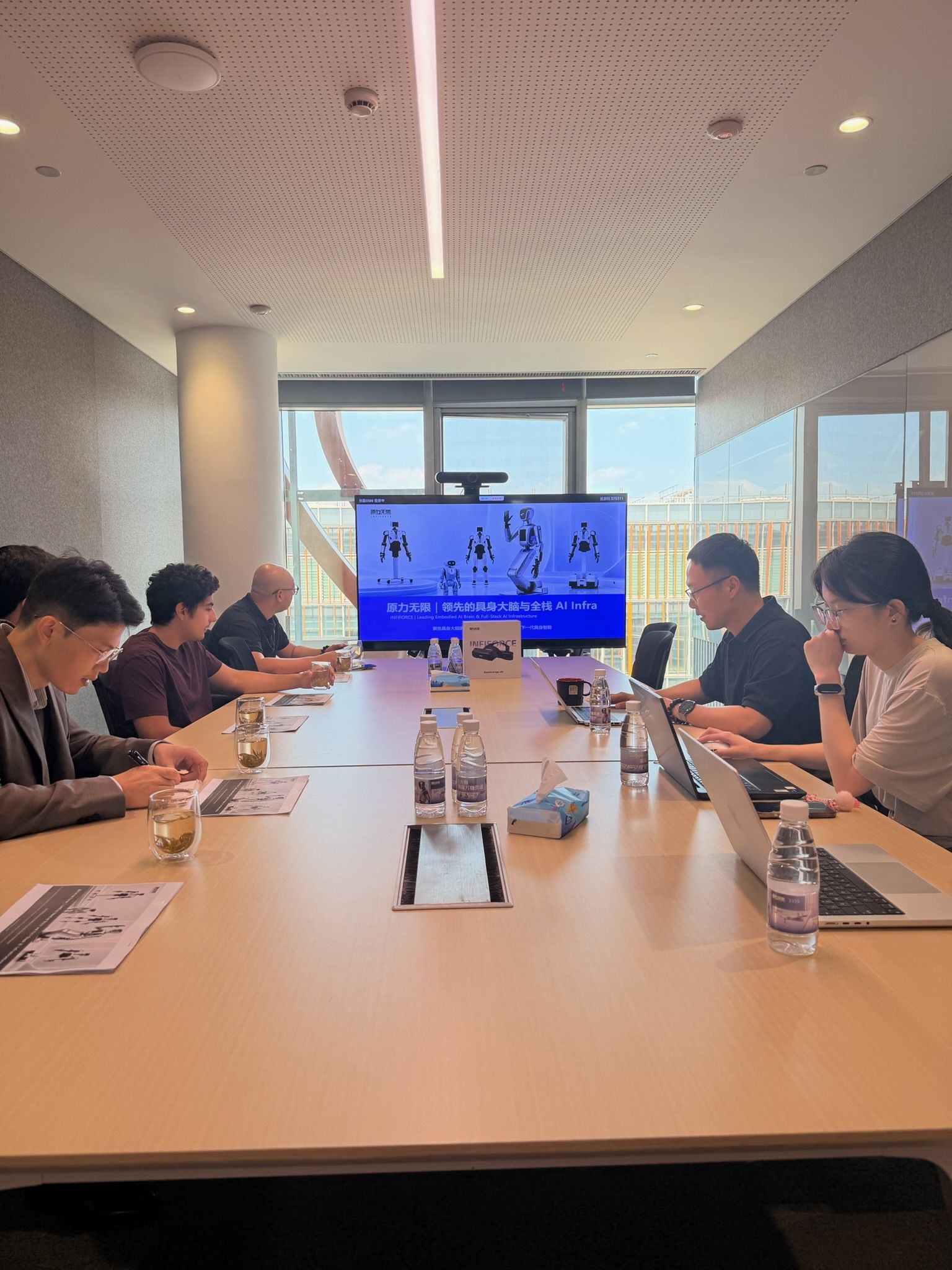
Meeting with INFIFORCE, Hangzhou
What it means for companies outside China
1. Price is a weapon. ByteDance prices frontier-class models far below Western peers, which changes the economics of building AI products.
2. AI video is now a production tool. With Seedance inside CapCut in Latin America, companies there can already produce multi-shot, voiced video with a Chinese model.
3. Humanoid robots have revenue. In 2026 they moved from demos to purchase orders. For manufacturers, the question is shifting from “if” to “where first”.
We design bespoke expeditions for executive teams who want to see China’s technology and industry from the inside.
Write to us at hello@gatekaizen.com or explore our Business Networking Expeditions.
Explore our expeditions