A China study tour built around Alibaba and JD.com is a structured look at how China’s two largest e-commerce groups actually run: one campus visit in Hangzhou, where Alibaba still advertises a group-reservation programme, and a hosted visit into JD.com’s logistics network, which is organised through official or chamber channels rather than a public ticket. It is a business trip, not a sightseeing circuit.
This article is for export managers, brand teams and leadership groups who need to see those platforms at close range. It sets out what official 2025–2026 visit reports actually describe, which figures are network-level rather than site-level, and how a visit is requested. For the commercial programme, see our consumer and e-commerce expedition. Teams comparing this route with a wider leadership week can also read the China executive study tour.
Key takeaways
- Alibaba’s Hangzhou campus is the more clearly advertised stop. Official Hangzhou tourism still listed a group-reservation visit to the Alibaba Global Headquarters AI Smart Campus, 09:00–17:00, as of 9 July 2026.
- Documented visit content is specific, not a free walk-through. Official write-ups describe the Xixi visitor centre, new-retail demonstrations at Xincherli, infrastructure built for peak e-commerce traffic (April 2026) and, on a September 2025 academic visit, a Qwen open-source briefing.
- Asia No.1 is a network, not one warehouse. As of 30 June 2026, JD Logistics operated 46 Asia No.1 smart industrial parks in 31 cities across China (JD Logistics 2026 interim report, filed with the Hong Kong stock exchange). We have no verified 2026 robot-count or daily-throughput figure for a named site.
- JD visits are hosted, not ticketed. A documented 8 April 2026 official programme took a study group through an automated high-bay warehouse and an intelligent sorting workshop at a JD Asia No.1 park. We found no official public booking page.
- Plan 2027 entry now. The 30-day visa-free arrangement for ordinary passports from Spain, most EU countries, the United Kingdom, Canada and several Latin American countries runs until 24:00 on 31 December 2026, Beijing time. As of 19 November 2026 no general extension into 2027 had been announced.
What a China study tour of Alibaba and JD.com involves
The useful question is what a foreign business team is actually allowed to see, and through which door. Alibaba and JD.com both receive foreign delegations, but they do not offer the same kind of access. One has an official city-tourism reservation channel for a campus visit. The other, on the evidence we can point to, is reached through a hosted programme: a chamber, an investment-promotion office or an official exchange.
That is why this China study tour is usually designed as a two-city business route rather than a single campus day. Alibaba’s headquarters sit in Hangzhou, next to the platform and robotics cluster covered in our Shanghai and Hangzhou tech tour. JD.com is reached in Beijing, in the same city as the logistics and robotics corridor described in our Beijing tech tour. Other platforms can be added when the brief needs them; our consumer and e-commerce expedition lists the companies consumer delegations work with, and states that access is requested for each brief and confirmed with each company.
What you are usually offered, at both companies, is a hosted visit: a briefing, a showroom, an exhibition hall or a demonstration line. That is not a factory audit, which follows a different process and a different depth of access. Teams that need an audit should plan one separately.
Alibaba in Hangzhou: the campus visit that is actually advertised
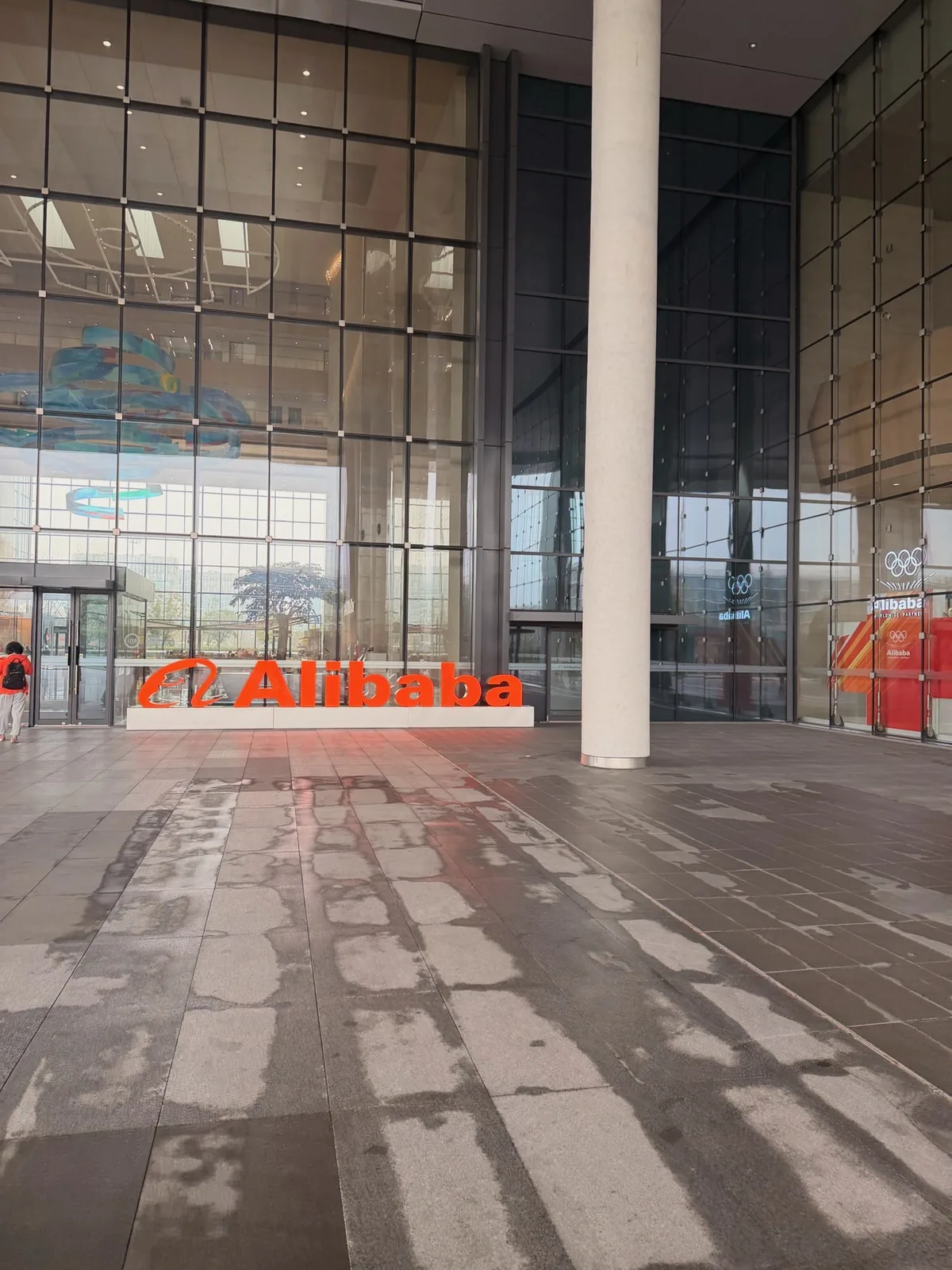
Of the two companies, Alibaba is the one with a clearly published, official reservation route. A Hangzhou Tourism page dated 9 July 2026 still listed the Alibaba Global Headquarters AI Smart Campus, with hours given as 09:00–17:00 and a note that visits are by group reservation only. That is the most recent official tourism wording we opened. It does not, by itself, republish the older three-route menu, phone numbers or fees from a February 2025 municipal booking guide, so those details should be reconfirmed before they are treated as current operating rules.
The February 2025 Hangzhou “Digital Economy Tourism Top 10” guide, still online on 19 November 2026, remains the most detailed official description of a reserved visit. It describes the Xixi campus visitor centre and Xincherli as a new-retail demonstration: Freshippo 30-minute delivery and a mall heat-map screen, Xianyu device recycling, Tmall trial machines, and the FlyZoo hotel. Treat that as the official menu as of February 2025, not as a guarantee of what every later group will be walked through.
A later official visit report is more useful as evidence of what foreign business guests have actually been shown. On 23–24 April 2026, a fact-finding delegation of representatives from more than 150 foreign companies in the United States, South Korea, France, the United Kingdom and Canada visited Hangzhou (ehangzhou.gov.cn, 27 April 2026). At Alibaba’s Xixi campus, the official city report says, they examined infrastructure built for peak e-commerce traffic. The same tour also went to Cainiao headquarters, for algorithm-driven packaging optimisation and smart logistics systems. We did not find a 2026 official Cainiao visitor-centre page.
An earlier hosted visit is also on the official record. On 17 September 2025, an international academic delegation organised by Fudan University’s Institute for Global Public Policy toured Alibaba Global Headquarters. The institute’s write-up says the group visited the Xixi Campus exhibition hall and a corporate-history exhibition, then held a roundtable at which Alibaba colleagues presented Qwen as a case of the company’s open-source approach. That was a hosted academic visit, not a public ticket.
In practice, the booking route we can document at official level is Hangzhou’s group-reservation tourism channel and, for many foreign business groups, a hosted programme arranged through a city office, a chamber, a university or an investment-promotion desk. We did not find a public self-service ticket page on Alibaba Group’s own site. Gate Kaizen’s consumer and e-commerce expedition already lists Alibaba in Hangzhou among the company visits on a past sample route; access on a new trip is still requested for that brief and confirmed with the host.
JD.com and the Asia No.1 network
JD.com is often described, in conversation, as a visit to “the Asia No.1 warehouse.” That shorthand is misleading. Asia No.1 is a network of smart industrial parks, not a single building. JD Logistics’ 2026 Interim Report, filed with the Hong Kong stock exchange, states that as of 30 June 2026 the company operated 46 Asia No.1 smart industrial parks in 31 cities across China.
The same report, from the same date, gives the network-level figures that can be used with a date attached: a nationwide warehouse network of over 1,800 self-operated warehouses and over 2,000 third-party “cloud” warehouses, with aggregate gross floor area of more than 36 million square metres; a self-operated fleet of over 70,000 vehicles; JD Airlines with 13 self-operated all-cargo aircraft; overseas warehouses in 26 countries and regions, with over 200 overseas warehouses and aggregate gross floor area exceeding 2 million square metres; and deployment of a self-developed “LangzuTech” robot series and a “Metabrain” large model, with LangzuTech deployed in more than 30 warehouses in China. Those are group figures as at 30 June 2026, not 2026 operating statistics for a named site.
The first Asia No.1 park, according to an official JD Logistics newsroom article dated 14 June 2023, opened in Shanghai’s Jiading district in October 2014, with a then total building area of 100,000 square metres. That history is useful context. It is not a substitute for current site-level figures, and we do not recycle older campus statistics as if they described a 2026 Beijing visit.
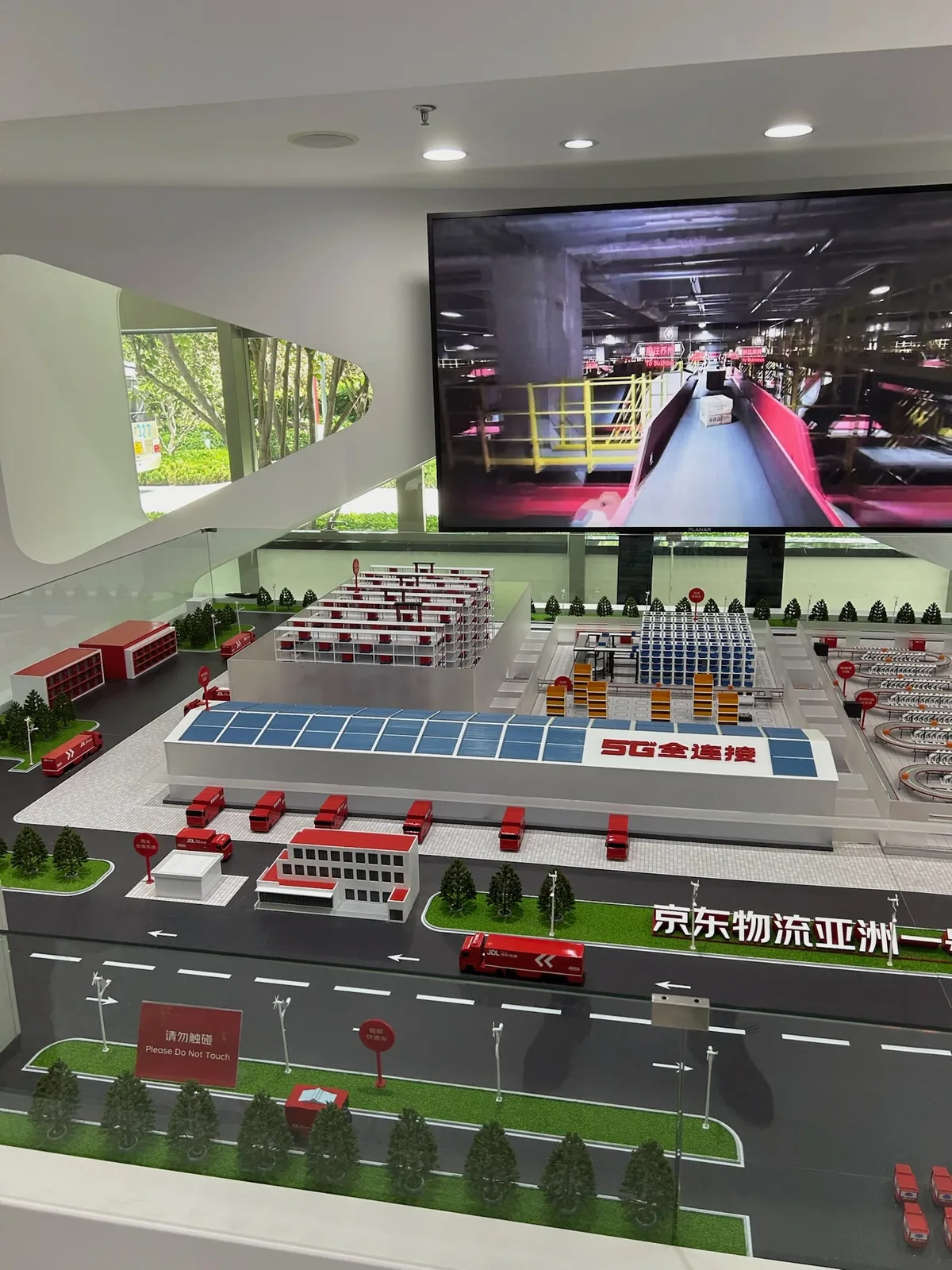
A documented 2026 visit is more useful than a list of unverified robot counts. On 8 April 2026, the CCPIT Beijing sub-council, the China International Youth Exchange Center and the Beijing Logistics and Supply Chain Management Association took a Malaysian young-entrepreneurs study group of more than 60 people to a JD Asia No.1 smart industrial park (CCPIT Beijing, 9 April 2026). The official write-up says they visited an automated high-bay warehouse and an intelligent sorting workshop, were briefed on the park’s operating model, and then held a discussion with JD Logistics on technology innovation, overseas expansion and cross-border cooperation.
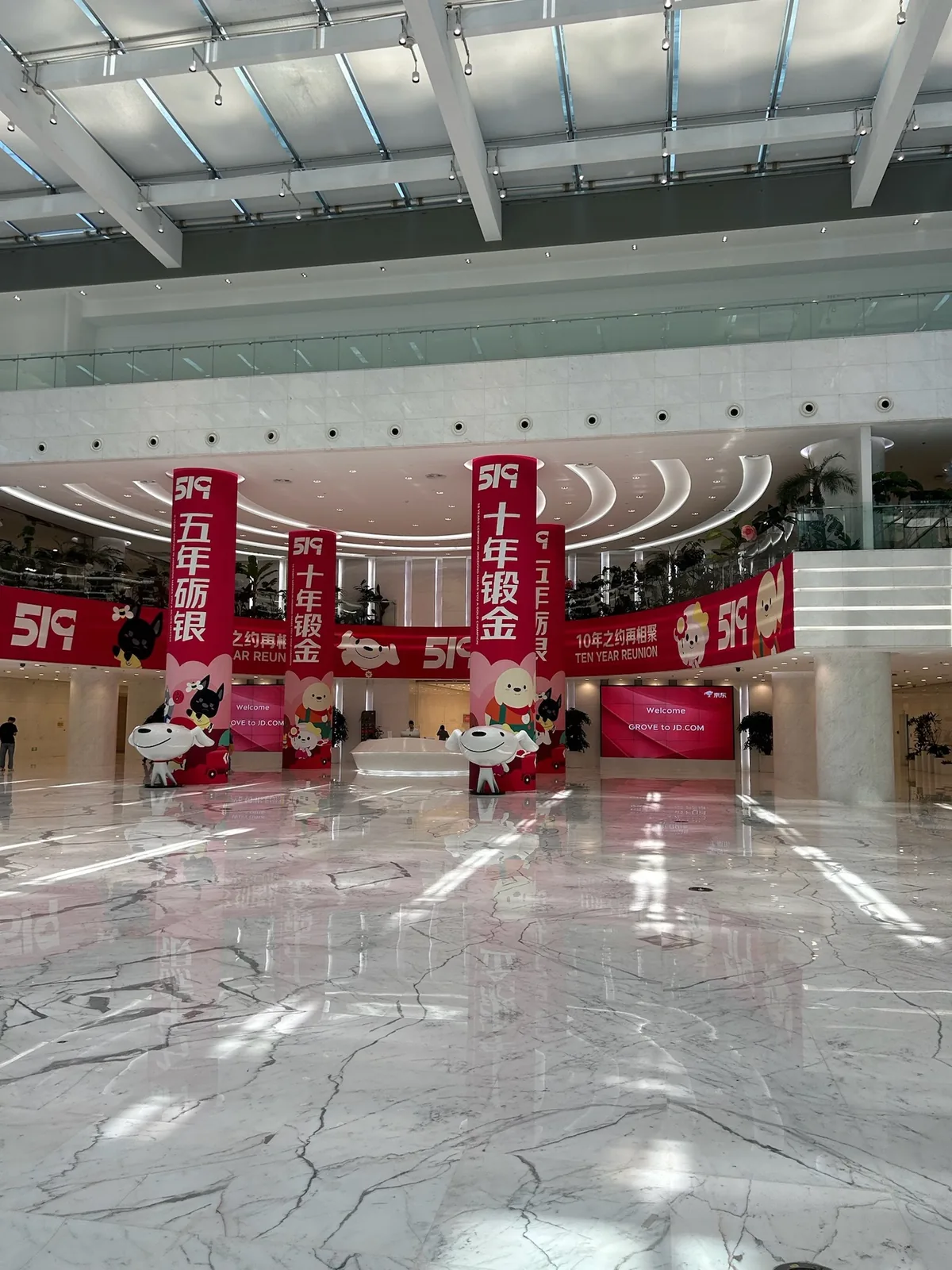
We did not find an official JD public booking page for Asia No.1 tours. The documented 2026 route is through a chamber, CCPIT or official exchange programme, not a self-ticketed visitor centre. That is also how Gate Kaizen treats the stop: our consumer and e-commerce expedition includes a JD.com company visit in Beijing on a past sample itinerary, and states that meetings are matched to the category and confirmed with the company. A headquarters exhibition, including a scale model of an Asia No.1 park, is not the same thing as a day spent inside a working fulfilment site, and we do not describe it as one.
How the two visits sit on one business route
Most leadership teams do not fly to China to see only one platform. Alibaba is in Hangzhou, a short hop from Shanghai; JD.com is reached in Beijing. A past Gate Kaizen consumer expedition used a Beijing-to-Yangtze-River-Delta sample: JD.com, Baidu and Douyin in Beijing, Alibaba in Hangzhou, and Xiaohongshu plus institutional meetings in Shanghai. That is an example from a past trip, not a fixed public timetable. Every new route is built around the brief.
Hangzhou for the platform campus
The Alibaba stop is the one with an official tourism reservation channel still advertised in July 2026. A wider Hangzhou day can be added if the brief needs it: Cainiao appeared on the official April 2026 foreign-company tour, and robot makers sit in the same city. Our Shanghai and Hangzhou tech tour covers that cluster, including the official “six little dragons” list and the visits that are, and are not, bookable.
Beijing for JD.com and the capital platforms
A JD.com visit is requested through official or hosted channels. The same city can also include other platform meetings when the brief needs them; our e-commerce expedition names Baidu and Douyin in Beijing among the companies consumer delegations work with. The Beijing tech tour is the better starting point if the main objective is large-model labs or the Yizhuang robotics corridor rather than e-commerce merchandising.
What this route is not
It is not a substitute for a factory audit, and it is not a public tour of every brand in the Alibaba or JD ecosystem. Teams that need hardware, robotics and policy across Shenzhen, Hangzhou, Shanghai and Beijing should look at the Deep-Tech & AI expedition and at the executive study tour.
Two planning constraints are worth stating before the FAQ. First, the length, the dates and the price are set with each group: dates are on request, and pricing depends on group size and programme, with a tailored quote after enquiry and no published starting price. Second, the 30-day visa-free arrangement for ordinary passports from Spain, most EU countries, the United Kingdom, Canada and several Latin American countries runs only until 24:00 on 31 December 2026, Beijing time. As of 19 November 2026 no general extension into 2027 had been announced. For trips in 2027, check the Chinese embassy in your country before booking.
Frequently asked questions about a China study tour
What is a China study tour of Alibaba and JD.com?
A China study tour built around Alibaba and JD.com is a structured business visit, not a public ticketed tour. Official Hangzhou tourism still advertised a group-reservation visit to Alibaba’s campus as of July 2026. Documented 2026 access to a JD Asia No.1 park has come through chamber and official exchange programmes. Gate Kaizen requests each visit for the brief and confirms it with the host.
What do you actually see at Alibaba in Hangzhou?
It depends on the programme that is approved. Official materials describe the Xixi visitor centre and, on some routes, new-retail demonstrations at Xincherli. An official April 2026 city report says a 150-plus foreign-company delegation examined infrastructure built for peak e-commerce traffic. A September 2025 Fudan University visit included the exhibition hall and a briefing that used Qwen as a case of Alibaba’s open-source approach. None of that is an unescorted walk-through.
Can we visit a JD Asia No.1 warehouse?
Asia No.1 is a network, not a single warehouse. As of 30 June 2026, JD Logistics operated 46 Asia No.1 smart industrial parks in 31 cities across China, according to its interim report filed with the Hong Kong stock exchange. We have not verified 2026 robot-count or daily-throughput figures for a named site. A documented April 2026 official programme took a study group through an automated high-bay warehouse and an intelligent sorting workshop, then a discussion with JD Logistics. Access on a Gate Kaizen route is still requested for that brief.
Is a company visit the same as a factory audit?
No. A hosted company visit is usually a briefing, a showroom, an exhibition hall or a demonstration line. A social-compliance or technical factory audit follows a different process, with a different mandate and a different depth of access. Teams that need an audit should plan one separately.
How long should the trip be, and what does it cost?
The length and the dates are set with each group around the agenda. A route that takes in Alibaba in Hangzhou and JD.com in Beijing is usually treated as one trip, often with a stop in Shanghai. Pricing depends on group size and programme; we send a tailored quote after your enquiry. There is no published starting price.
Do I need a visa for a business trip to Hangzhou or Beijing?
It depends on your passport. Ordinary-passport holders from Spain and most (not all) EU countries, the United Kingdom, Canada, and from Argentina, Brazil, Chile, Peru and Uruguay can currently enter China visa-free for up to 30 days for business, until 24:00 on 31 December 2026, Beijing time. Czech and Lithuanian passports are not on that 30-day list. Mexico is eligible for 240-hour visa-free transit only; Colombia, Ecuador and Paraguay are on neither official list we checked. As of 19 November 2026 no general extension into 2027 had been announced. For trips in 2027, check the Chinese embassy in your country before booking.
Plan your e-commerce study tour
Gate Kaizen’s consumer and e-commerce expedition is a market-intelligence trip for export managers and international brands. Meetings are matched to your category, including Alibaba in Hangzhou and JD.com in Beijing on a past sample route, and access is requested for each brief. Dates are set with each group. Pricing depends on group size and programme; we send a tailored quote after your enquiry.