There are very few places in the world where you can physically experience how modern hardware innovation actually works.
And among them, Shenzhen’s Huaqiangbei stands in a category of its own.
For many foreign visitors, Huaqiangbei initially feels chaotic: thousands of small component shops, endless malls filled with electronics, LED panels everywhere, suppliers negotiating inside tiny booths, engineers searching for components, and entrepreneurs carrying prototype devices between buildings.
But behind that apparent chaos lies one of the most efficient hardware ecosystems ever created.
In 2026, Huaqiangbei remains one of the most important electronics markets in the world for hardware startups, sourcing professionals, OEM buyers, IoT companies, robotics firms, consumer electronics brands, and manufacturing operators.
What Is Huaqiangbei?
Huaqiangbei is a large electronics commercial district located in Shenzhen, China.
It is often described as the largest electronics market in the world, but that description alone does not fully explain its importance.
Huaqiangbei is not one single building.
It is an entire ecosystem composed of multiple interconnected malls, suppliers, distributors, repair networks, component traders, PCB specialists, OEM manufacturers, prototyping services, logistics operators, tooling providers, and hardware engineering networks.
Within a relatively small urban area, companies can source almost every component required to build consumer electronics products.
This density is precisely what makes Shenzhen unique.
If you are exploring broader China sourcing strategies beyond electronics ecosystems, we also recommend reading our guide on flexible supply chain models in China.
Why Huaqiangbei Became Globally Important
Most countries have factories.
Very few countries have complete hardware ecosystems.
The real strength of Shenzhen is not low labor cost anymore. China’s coastal manufacturing regions are no longer particularly cheap compared to Southeast Asia.
The advantage is ecosystem integration.
Inside Shenzhen, component suppliers, PCB manufacturers, chip distributors, industrial designers, rapid prototyping workshops, assembly factories, packaging companies, and logistics infrastructure operate within an extremely compressed geographic area.
This allows hardware companies to move at extraordinary speed.
A prototype that might take several weeks to iterate in Europe or North America can sometimes be modified in Shenzhen within days.
Engineers can physically walk between suppliers, compare components in person, negotiate directly, and solve technical issues in real time.

What You Can Find Inside Huaqiangbei
One of the reasons first-time visitors become overwhelmed is the sheer scale and specialization of the ecosystem.
Electronic Components
Microchips, sensors, connectors, LEDs, batteries, displays, semiconductors, resistors, capacitors and thousands of other hardware components.
Consumer Electronics
Smartphones, tablets, drones, smartwatches, gaming accessories, smart home devices, audio equipment and OEM electronics products.
Rapid Prototyping Services
PCB production, CNC machining, 3D printing, tooling support and small-batch manufacturing services.
Hardware Modification Ecosystems
Repair networks, customization workshops, hardware adaptation specialists and component replacement operators.
For sourcing professionals and hardware founders, the ecosystem becomes especially valuable because suppliers are concentrated geographically.
Instead of spending weeks coordinating remotely, companies can compare multiple suppliers within a single day.

Why Foreign Companies Often Misunderstand Huaqiangbei
Many first-time visitors approach Huaqiangbei as if it were simply a wholesale market.
That is a mistake.
The real value of Huaqiangbei is not only purchasing products.
It is a window into China’s entire electronic supply chain. The ecosystem is highly interconnected and optimized for speed.
Factories, component suppliers, engineers, logistics operators, and distributors often work within tightly integrated regional networks.
Many foreign buyers first discover these ecosystems through sourcing platforms such as 1688 China sourcing, but understanding how these supply chains operate physically on the ground is a completely different experience.
Why Visiting Huaqiangbei Physically Still Matters in 2026
If you are building a prototype and want your ideas to become reality within hours, there are very few places on earth where that is possible.
What in Silicon Valley can take months of sourcing coordination, prototyping discussions, supplier communication, operational alignment and countless meetings can often be compressed into a single afternoon in Shenzhen with the right local technical support and ecosystem access.
Many consumer electronics products, from simple gadgets to highly sophisticated smart devices, can be assembled here within hours by sourcing all required components within a relatively small geographic area.
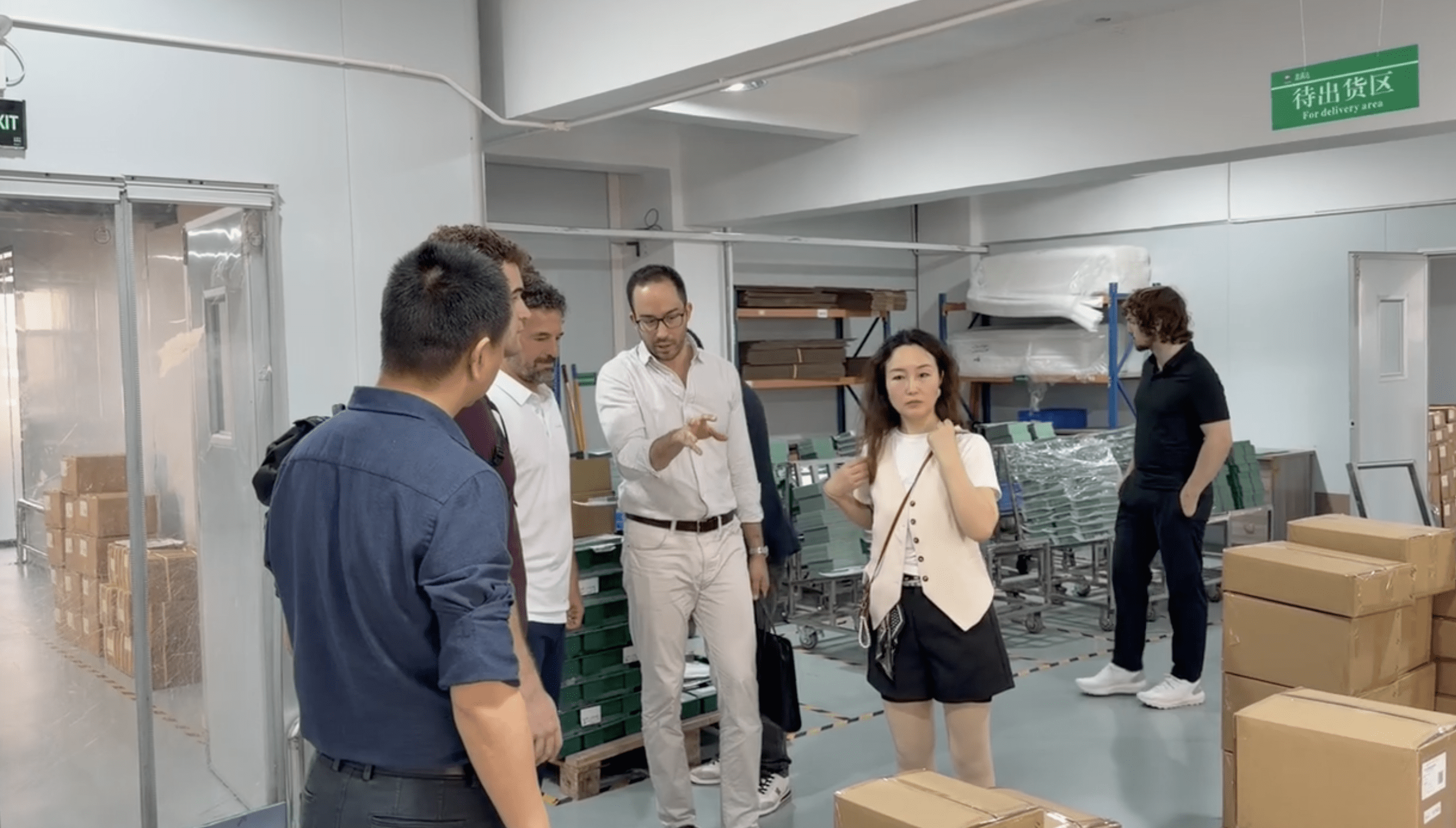
If factory visits are required for later-stage production manufacturing, the production lines themselves are often located only 30 to 60 minutes away from the market.
This is a supply chain built for speed. The engine behind China’s manufacturing ecosystem.

Important Reality About Shenzhen
Many of the companies building the next generation of robotics, AI hardware, drones, medtech devices, IoT products and smart manufacturing systems still rely heavily on Shenzhen’s hardware ecosystem for sourcing, prototyping and manufacturing support.
From Huaqiangbei to Full Manufacturing Ecosystems
One of the biggest misconceptions foreign visitors have is assuming Huaqiangbei itself is the manufacturing center.
In reality, Huaqiangbei functions more as the commercial and operational interface of the wider Pearl River Delta hardware ecosystem.
The actual production networks extend across Shenzhen, Dongguan, Guangzhou, Foshan, Zhongshan and surrounding industrial regions.
This broader ecosystem includes:
- Electronics factories
- PCB manufacturing plants
- Injection molding suppliers
- Battery manufacturers
- Metal processing facilities
- Packaging companies
- Assembly operations
- Logistics infrastructure
For companies planning factory sourcing trips beyond Shenzhen itself, our guide on how to visit Chinese factories properly explains how experienced operators evaluate suppliers and manufacturing ecosystems on the ground.
Who Visits Huaqiangbei Today?
Today, Shenzhen attracts a wide range of international visitors:
Hardware Startups
Companies developing new consumer electronics, IoT products and connected devices.
Corporate Innovation Teams
Executives studying manufacturing trends, supply chains and China’s industrial capabilities.
Sourcing Managers
Professionals searching for suppliers, OEM manufacturers and production partners.
Investors and Tech Operators
People seeking firsthand understanding of how China’s hardware and innovation ecosystems function.
The Shortcut: Structured Shenzhen Business Expeditions
For many foreign companies, organizing a high-quality Shenzhen sourcing and ecosystem trip independently can become extremely inefficient.
Language barriers, supplier verification, regional logistics, factory coordination and ecosystem navigation often create major operational friction.
This is why many product designers, founders and sourcing professionals now prefer structured China business expeditions that combine Huaqiangbei visits, factory tours, innovation ecosystem exposure, supplier meetings and operational guidance into one coordinated experience.
The objective is not tourism.
It is compressing months of fragmented learning into a high-density operational understanding of how China’s hardware ecosystem actually works.
Interested in Visiting Shenzhen’s Hardware Ecosystem?
Our China business expeditions include Huaqiangbei visits, factory tours, supplier meetings, innovation ecosystem exposure, translation support and logistics coordination across Shenzhen and the Greater Bay Area.
Explore Upcoming China ExpeditionsFinal Thoughts
Huaqiangbei is one of the few places in the world where hardware innovation can still be experienced physically at ecosystem scale.
It is not simply about electronics markets.
It is about understanding how China built one of the most sophisticated manufacturing and hardware ecosystems on the planet.
For founders, sourcing professionals, executives and innovation teams, visiting Shenzhen often changes the way they understand manufacturing, product development and global supply chains entirely.