Most industries are structured around companies competing independently.
EV China is not.
It is a coordinated industrial architecture where value is created across multiple layers simultaneously: vehicle manufacturers, battery producers, component suppliers, and industrial clusters.
Companies such as BYD operate within this system as vertically integrated players, but their real strength comes from how they are embedded within a wider ecosystem rather than operating in isolation.
Each part of the structure depends on the others.
A change in battery chemistry affects vehicle design. A change in supplier capacity affects assembly speed. A change in cluster density affects iteration cycles.
In practice, engineering teams, suppliers, and manufacturers often work in parallel rather than through sequential approval chains. Design decisions can move directly into production coordination without long procurement cycles.
Performance is not defined at company level, but at ecosystem level.
This is why traditional industry analysis often fails to capture what is happening. It isolates companies, while the real competitive advantage comes from the connections between them: the ecosystem.
This ecosystem did not happen in China by chance; it is not a product of “laissez faire” economics. On the contrary, it is the product of an intentionally designed, carefully planned and meticulously executed industrial policy built around long-term strategic coordination.
The Physical Structure of China’s EV Ecosystem
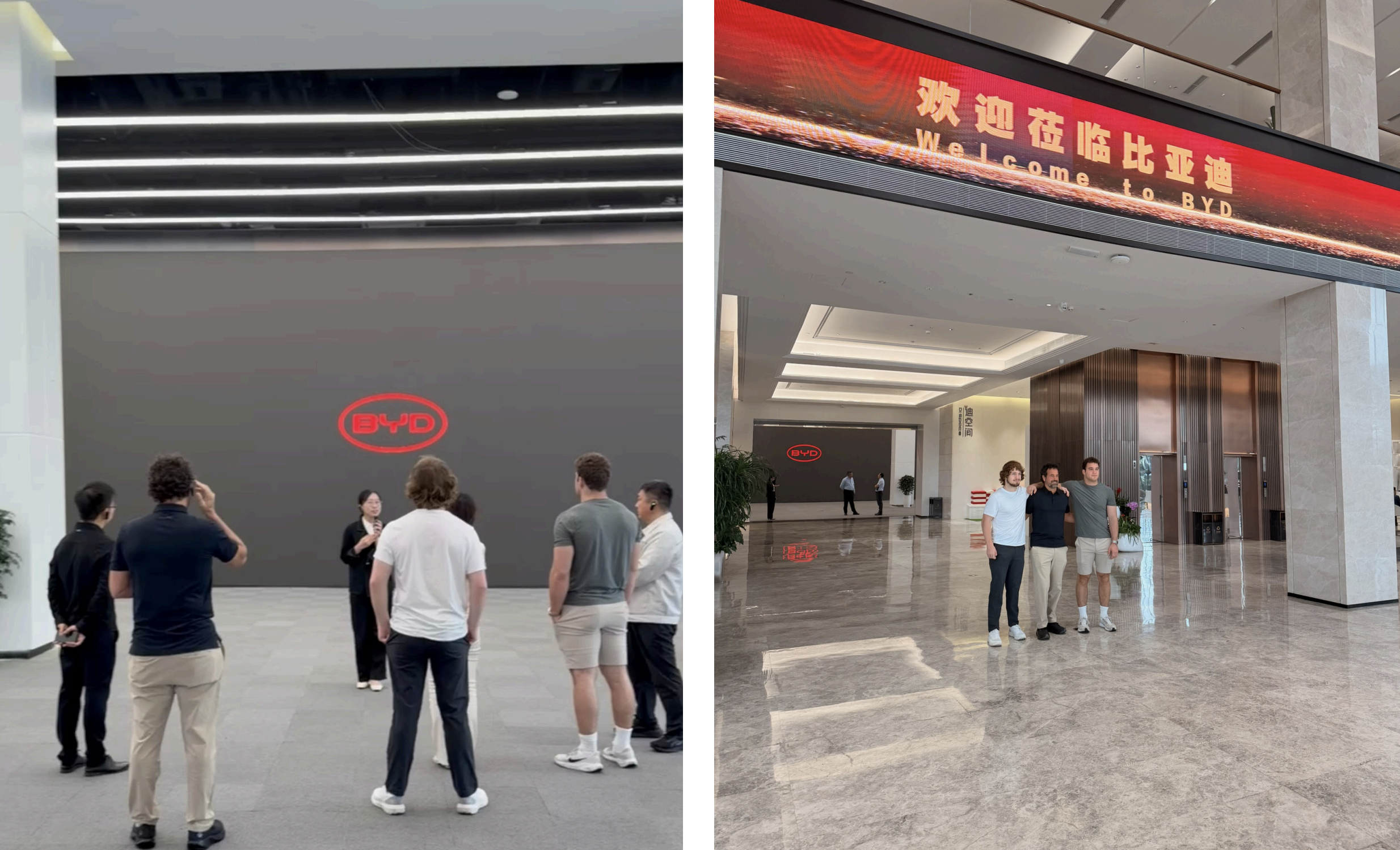
The EV ecosystem in China is not an abstract concept; it is a geographically concentrated and operationally interconnected cluster of actors across the whole value chain.
At the centre are electric vehicle manufacturers responsible for design and final assembly.
Around them are battery producers, component suppliers, semiconductor manufacturers, software developers, logistics operators, tooling providers, and industrial parks operating within tightly integrated manufacturing corridors.
What makes the system structurally unique is not only the presence of these actors, but their physical proximity.
In regions such as the Greater Bay Area, EV manufacturing, battery production, and component suppliers are often located within the same industrial corridors. This creates extremely high supplier density and enables real-time iteration across the entire value chain.
Factories, tooling providers, logistics operators, and engineering teams operate within compressed geographic zones, where problem-solving happens directly between actors rather than through long-distance coordination.
A defining feature of the ecosystem is the presence of industrial clusters, where entire value chains are compressed into geographic zones. These clusters function as real-time production environments where issues are solved within hours or days through direct physical interaction.
The system is also shaped by government industrial policy, which acts as a structural layer enabling long-term coordination, infrastructure development, and alignment across the value chain.
If you are interested in understanding how China developed these manufacturing ecosystems more broadly, we also recommend reading our guide on flexible supply chain models in China.
Vertical Integration and System Efficiency
A key characteristic of EV China is the degree of vertical integration across the value chain.
Many players operate across multiple stages of production, from design to components to final assembly.
Companies such as BYD are often cited as examples of this model, integrating battery production, components, and vehicle assembly within the same industrial structure.
This integration reduces dependency between actors and compresses decision-making layers.
Instead of negotiating across fragmented suppliers and external partners, production becomes more internally coordinated and faster to adjust.
The result is a structure where optimization is not linear, but systemic: improvements in one part of the chain immediately affect the others.
In practice, the ecosystem becomes self-reinforcing. Higher supplier density increases iteration speed, which attracts more manufacturers, which further increases ecosystem density.
Over time, this creates compounding structural advantages that are extremely difficult to replicate.
That is why long-term planning has been an essential factor for the development of this ecosystem, and why Western manufacturers will have a hard time competing with it under completely different industrial conditions.
What Are the Main Players to Keep an Eye On?
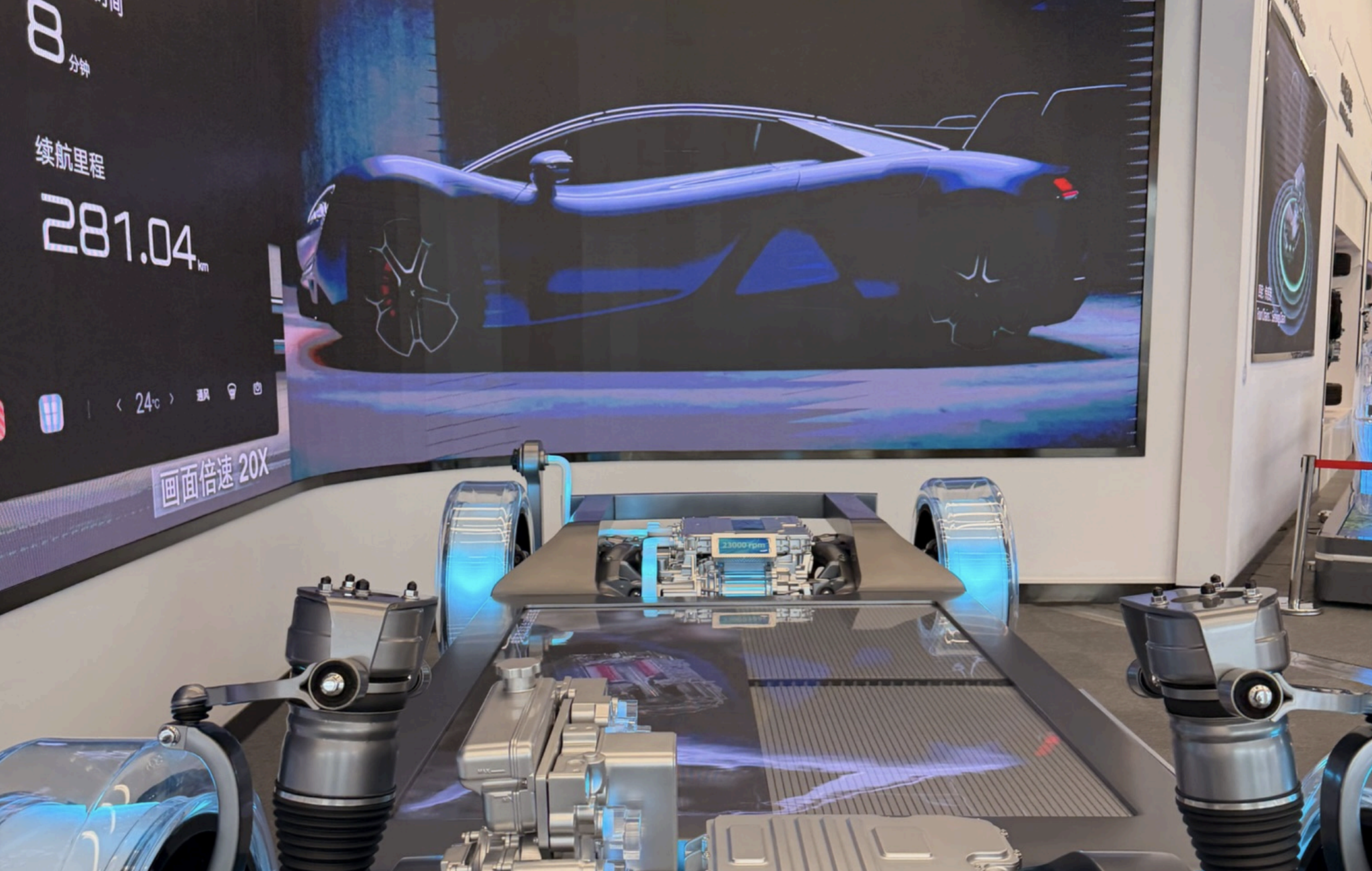
China’s EV ecosystem is composed of different categories of industrial actors operating across batteries, manufacturing, autonomous systems, software integration, and supply chain infrastructure.

BYD
BYD is perhaps the clearest example of China’s vertically integrated EV model. The company combines battery production, semiconductor development, vehicle manufacturing, and supply chain coordination within the same industrial structure. Its competitive advantage comes not only from scale, but from controlling multiple layers of the value chain simultaneously.
NIO
NIO represents another important dimension of China’s EV ecosystem: software integration, premium positioning, and ecosystem-based user experience models. The company has invested heavily in intelligent vehicle systems, battery-swapping infrastructure, and connected mobility services.
XPeng
XPeng focuses strongly on autonomous driving systems, AI integration, and intelligent vehicle architecture. The company reflects the growing convergence between China’s EV sector and its broader software, AI, and smart manufacturing ecosystems.
Li Auto
Li Auto demonstrates the importance of pragmatic market adaptation within China’s EV ecosystem. Rather than focusing exclusively on fully electric systems from the beginning, the company accelerated growth through extended-range electric vehicle models adapted to China’s infrastructure realities and consumer preferences.
Geely
Geely represents a different type of industrial actor: a large-scale automotive group integrating domestic manufacturing capabilities with global automotive assets and international partnerships across multiple automotive segments.
Many foreign automotive executives first encounter these companies through international media coverage or export statistics. But understanding how these firms operate within China’s industrial structure requires observing the ecosystem directly on the ground.
Speed as a Structural Advantage
Another of the most visible outcomes of this system is speed.
Design, production, testing, and adjustment operate as continuous feedback loops rather than separated phases.
Information flows instantly between suppliers, manufacturers, and production sites.
There is no delay between identification of a problem and its implementation.
A prototype change in one component can be reflected directly into manufacturing adjustments within days, sometimes even hours in highly dense industrial clusters.
Compared to fragmented industrial systems, where coordination slows everything down, EV China operates on compressed cycles.
This is not just operational efficiency; it is structural acceleration.
The system is designed to reduce latency at every possible point: physical distance, communication layers, decision hierarchies, and supplier fragmentation.
A major part of this also comes from Chinese business culture and industrial intensity, which remain significant competitive advantages that are difficult for overseas competitors to replicate structurally.

Why This Matters Globally
China’s EV ecosystem is no longer only a domestic manufacturing story. It is increasingly shaping global automotive supply chains, battery technologies, industrial standards, and the future direction of mobility systems worldwide.
What This Means for Executives and Operators
Understanding EV China requires a shift in perspective.
The relevant unit of analysis is not the company — it is the structure.
Competitive advantage comes from positioning within the ecosystem, not only from product strength or brand.
In this context, supply chains are not operational tools. They are strategic assets.
And industrial scaling is not company growth. It is system expansion.
Executives who analyze EV China only at company level miss the structural logic that actually determines performance: coordination density, proximity, and integration speed.
At this level, the distinction between company and supply chain disappears in practice.
Structured China Business Expeditions
If you are interested in understanding what the future of the automotive industry will look like, you need to observe what happens in the part of the world where things are actually happening.
Reports and data can describe the structure of China’s EV industry.
But they cannot show how it actually works.
The system becomes visible only through physical observation.
Our China business expeditions are designed for founders, executives, and industrial decision-makers who want to observe industrial systems directly on the ground in China.
Interested in Exploring China’s EV Ecosystem Firsthand?
Our China business expeditions include EV manufacturing facility visits, industrial cluster exposure, supplier ecosystem tours, logistics coordination, and direct observation of how China’s automotive supply chains operate in practice.
Explore Upcoming China ExpeditionsFinal Thoughts
China’s electric vehicle industry is not a collection of companies competing in a market.
It is an integrated industrial system built on coordination, proximity, and scale.
What makes it unique is not only the technology or the companies involved, but the way the entire production ecosystem operates as a single connected structure.
For founders, executives, and operators, understanding this system changes how industrial competition is interpreted entirely.
It is not something that can be fully understood through reports or analysis alone.
It is something that becomes clear only when observed directly inside factories, supply chains, and industrial clusters across China.